MSRP Meaning: What Is Manufacturer’s Suggested Retail Price?
Introduction
Staring at a price tag that reads “MSRP: $45,000” can feel confusing if you don’t know what those letters mean. You’re about to make a significant purchase, but this mysterious abbreviation leaves you wondering if you’re getting a fair deal. The manufacturer’s suggested retail price affects everything from the car you drive to the electronics in your home. Understanding MSRP empowers you to negotiate better, spot genuine discounts, and avoid overpaying for products you want.
What Does MSRP Stand For?
MSRP stands for Manufacturer’s Suggested Retail Price. This pricing benchmark represents the amount manufacturers recommend retailers charge for their products. The MSRP meaning goes beyond a simple number on a sticker—it creates a standardized reference point across different stores and markets.
Manufacturers calculate this price by considering production costs, desired profit margins, market positioning, and competitive analysis. Retailers receive this pricing guideline but aren’t legally required to follow it in most cases.
Key characteristics of MSRP:
- Set by the product manufacturer, not the retailer
- Acts as a pricing recommendation rather than a requirement
- Provides consistency across different selling locations
- Helps consumers compare prices between stores
How Is MSRP Different From Other Pricing Terms?
The retail world uses multiple pricing terms that sound similar but carry different meanings. Understanding these distinctions helps you make informed purchasing decisions.
MSRP vs. Invoice Price:
Invoice price represents what the dealer pays the manufacturer. This wholesale cost sits below MSRP, creating room for dealer profit and negotiation. The gap between these two numbers often determines how much wiggle room exists in price discussions.
MSRP vs. MAP (Minimum Advertised Price):
MAP sets the lowest price retailers can advertise a product, while MSRP suggests the highest retail price. MAP helps manufacturers avoid price wars that harm their brand’s reputation.
MSRP vs. Retail Price:
Retail price is what stores actually charge customers. This real-world price can sit above, below, or match MSRP depending on demand, competition, and business strategy.
Why Do Manufacturers Set an MSRP?
Manufacturers establish MSRP for strategic business reasons that benefit both their brand and consumers. This pricing tool serves multiple important functions in the marketplace.
Price consistency protects brand image across different regions and store types. When a luxury watch costs roughly the same at various authorized dealers, customers trust they’re receiving fair treatment regardless of location.
Primary reasons manufacturers use MSRP:
- Creates pricing uniformity across retail channels
- Establishes perceived product value in consumer minds
- Prevents harmful price wars between retailers
- Simplifies comparison shopping for customers
- Protects dealer profit margins
The suggested retail price also helps new products enter the market with clear positioning. A smartphone manufacturer launching a flagship device uses MSRP to signal premium quality and justify advanced features.
Where Is MSRP Most Commonly Used?
You’ll encounter the manufacturer’s suggested retail price across numerous industries, though some sectors rely on it more heavily than others.
Automotive Industry:
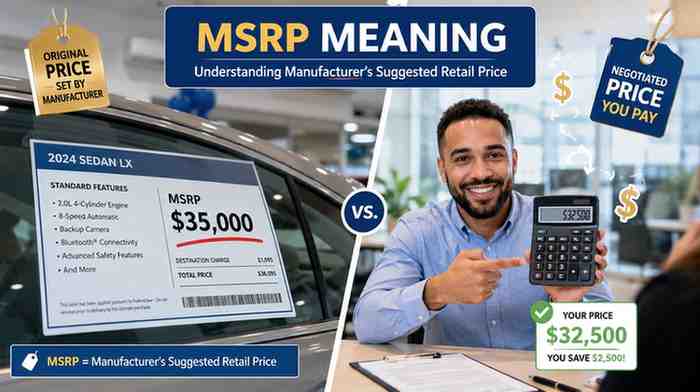
Car dealerships display MSRP prominently on window stickers of new vehicles. This pricing serves as the starting point for negotiations. Understanding MSRP meaning in automotive contexts helps buyers determine fair market value and dealer incentives.
Electronics and Technology:
Smartphones, laptops, cameras, and gaming consoles all feature MSRP at launch. Tech manufacturers use this pricing to position products against competitors and manage brand perception.
Appliances and Home Goods:
Refrigerators, washing machines, and kitchen equipment carry MSRP labels. These prices guide retailers while allowing flexibility for promotions and seasonal sales.
Sports Equipment and Outdoor Gear:
Bicycles, camping gear, and fitness equipment manufacturers set MSRP to maintain brand value across specialty retailers and big-box stores.
Can Retailers Sell Products Above or Below MSRP?
Retailers enjoy significant freedom in setting actual selling prices, with few legal restrictions on pricing above or below MSRP.
Selling below MSRP happens frequently during sales events, clearance periods, or when retailers want to move inventory quickly. High-volume stores often price popular items below MSRP because their business model depends on quantity sales rather than high margins.
Selling above MSRP occurs less often but isn’t illegal. When demand exceeds supply, retailers may charge premiums. Limited-edition products, hard-to-find collectibles, or items experiencing temporary shortages sometimes carry prices above manufacturer suggestions.
Situations allowing above-MSRP pricing:
- Supply chain disruptions limiting availability
- Extreme product popularity exceeding production capacity
- Exclusive or limited-edition releases
- Additional dealer services or customization included
- Geographic remoteness increasing transportation costs
State and federal antitrust laws prevent manufacturers from forcing retailers to charge specific prices. This protection ensures competitive markets benefit consumers through natural price discovery.
How Does MSRP Affect Your Purchase Decisions?
Understanding the manufacturer’s suggested retail price transforms you from a passive buyer into an informed negotiator. This knowledge creates tangible advantages during shopping experiences.
MSRP serves as your baseline for evaluating deals. When a store advertises “20% below MSRP,” you can calculate actual savings and compare them against competitor offerings. Without knowing MSRP meaning and values, these promotional claims become meaningless numbers.
Ways MSRP influences smart shopping:
- Enables accurate price comparisons across multiple stores
- Reveals whether advertised discounts represent genuine savings
- Provides negotiation leverage at dealerships
- Helps identify inflated pricing tactics
- Creates realistic budget expectations for major purchases
The suggested retail price also indicates manufacturer positioning. Higher MSRP typically signals premium materials, advanced features, or luxury branding. Lower MSRP suggests value-oriented positioning or budget-friendly options.
What Is the MSRP Sticker on New Cars?
The Monroney sticker, officially called the MSRP label, appears on every new car sold in the United States. Federal law requires this window sticker to provide transparent pricing information to consumers.
This detailed label breaks down the manufacturer’s suggested retail price into specific components. Base MSRP covers the standard vehicle without options. Additional charges include optional equipment, destination fees, and regional adjustments.
Standard information on automotive MSRP stickers:
- Base vehicle price
- Installed options and packages with individual costs
- Destination and handling charges
- Fuel economy ratings
- Safety ratings and crash test results
- Country of origin for major components
The destination charge typically adds $1,000 to $2,000 to the base MSRP. This mandatory fee covers transportation from the manufacturing plant to the dealership. According to the National Highway Traffic Safety Administration, these stickers protect consumers by ensuring pricing transparency before negotiations begin.
Should You Ever Pay MSRP?
Paying full manufacturer’s suggested retail price makes sense in specific situations, despite the common advice to always negotiate lower.
High-demand vehicles with limited supply often sell at MSRP or above. When a manufacturer releases an innovative model that generates enormous customer interest, dealers have little incentive to discount. Paying MSRP in these cases may be your only option to acquire the vehicle without waiting months.
Scenarios where paying MSRP is reasonable:
- Newly released models with no available inventory
- Limited production vehicles or special editions
- Models with factory incentives already reducing MSRP
- End-of-year closeouts where MSRP already reflects discounts
- Custom orders built to your exact specifications
The Federal Trade Commission notes that market conditions ultimately determine fair pricing. During normal conditions, most buyers negotiate below MSRP on vehicles. However, fair market value sometimes equals or exceeds the suggested price.
How Much Below MSRP Should You Pay?
Negotiating below the manufacturer’s suggested retail price requires research, timing, and understanding of market conditions. The achievable discount varies significantly by product category and circumstances.
Automotive purchases typically offer the largest negotiation range. Most buyers pay 5% to 12% below MSRP on new vehicles during normal market conditions. The Kelley Blue Book provides fair purchase price estimates that factor in current market trends and regional differences.
Electronics usually carry smaller margins. Expect 5% to 15% below MSRP during sales events, with minimal discounting on newly released technology. Retailers protect their margins more aggressively on high-tech products.
Factors influencing your ability to bargain below MSRP:
- Current inventory levels at dealerships or stores
- Time of year and seasonal buying patterns
- Model year transitions for vehicles
- Manufacturer incentives and rebates
- Your payment method and financing options
- Trade-in value on existing items
Appliances and furniture offer moderate negotiation opportunities. Sales events regularly feature 20% to 40% below MSRP, though these “discounts” often start from inflated baseline prices.
What Happens When Products Sell Consistently Below MSRP?
When retail prices consistently fall below MSRP across multiple stores, market forces are sending clear signals about product positioning and demand.
Overpriced MSRP relative to market expectations forces retailers to discount heavily. Manufacturers sometimes set suggested prices optimistically high, hoping premium positioning will elevate brand perception. When customers reject these valuations, actual selling prices stabilize at lower market-determined levels.
This pricing pattern appears frequently in competitive categories with numerous similar options. The manufacturer’s suggested retail price becomes a reference point that nobody actually pays rather than a meaningful pricing guide.
Consequences of persistent below-MSRP selling:
- Eroded brand value perception over time
- Conditioned customers waiting for discounts
- Reduced retailer margins affecting service quality
- Manufacturer pressure to lower official MSRP
- Market repositioning as value brand rather than premium
Smart manufacturers adjust MSRP to align with actual market values. This recalibration maintains pricing credibility and allows promotional discounts to feel genuine rather than perpetual.
How Do Online Retailers Handle MSRP?
E-commerce platforms approach manufacturer’s suggested retail price differently than traditional brick-and-mortar stores. Digital retail dynamics create unique pricing considerations.
Online retailers frequently display MSRP alongside their actual selling price. This visual comparison highlights savings and encourages immediate purchases. Amazon, Best Buy, and other major platforms use strikethrough pricing showing MSRP crossed out with their lower price prominently featured.
Transparency requirements vary by platform and jurisdiction. Some online marketplaces require sellers to verify MSRP claims, preventing false reference pricing that manufactures artificial discounts.
Online retail MSRP practices:
- Automated price matching against competitor websites
- Dynamic pricing adjusting throughout the day
- Flash sales dropping well below MSRP temporarily
- Manufacturer authorized pricing for brand-protected items
- Third-party sellers sometimes exceeding MSRP on scarce items
The Consumer Financial Protection Bureau warns shoppers to verify MSRP claims by checking multiple sources. Unscrupulous sellers occasionally inflate “original” prices to make their discounts appear more attractive.
What Role Does MSRP Play in Vehicle Leasing?
Understanding MSRP meaning becomes critical when leasing vehicles because the manufacturer’s suggested retail price directly affects monthly payment calculations.
Lease payments derive from the vehicle’s depreciation during your lease term. This depreciation calculation starts with the negotiated selling price, which dealers often call the “capitalized cost.” The closer this capitalized cost sits to MSRP, the higher your monthly payments become.
Savvy lessees negotiate the capitalized cost just as aggressively as purchase prices. Every dollar you reduce below MSRP decreases your monthly obligation.
MSRP impacts on lease agreements:
- Higher MSRP creates higher baseline for depreciation calculations
- Manufacturer lease incentives reduce effective MSRP
- Residual values express as percentage of MSRP
- Luxury vehicles with higher MSRP generate larger lease payments
- End-of-lease purchase options reference original MSRP
The residual value—what the car is worth at lease end—is typically expressed as a percentage of MSRP. A 60% residual on a $40,000 MSRP means the vehicle is projected to be worth $24,000 after your lease term.
How Has MSRP Changed in the Digital Age?
Technology and internet transparency have fundamentally altered how the manufacturer’s suggested retail price functions in modern commerce.
Price comparison tools allow instant MSRP verification across countless retailers. Consumers armed with smartphones can check whether advertised discounts reflect genuine savings or manipulative marketing within seconds.
This transparency pressures retailers toward honest pricing. Inflating MSRP to create fake discounts becomes risky when customers can immediately verify claims through competing websites.
Digital transformation of MSRP:
- Real-time price tracking across multiple retailers
- Browser extensions automatically showing MSRP comparisons
- Social media exposure of deceptive pricing practices
- Manufacturer direct-to-consumer sales bypassing traditional MSRP models
- Subscription pricing models replacing one-time MSRP purchases
Direct-to-consumer brands sometimes eliminate traditional MSRP entirely. Companies like Tesla display single transparent prices rather than suggested retail prices subject to dealer negotiations. This pricing approach removes information asymmetry between buyers and sellers.
Detailed MSRP Comparison Table
| Product Category | Typical MSRP Range | Actual Selling Price | Average Discount | Best Time to Buy | Negotiation Flexibility |
| New Vehicles | $25,000 – $80,000 | 5-12% below MSRP | 8% average | End of model year | High – significant room |
| Luxury Vehicles | $50,000 – $150,000+ | At or near MSRP | 0-5% average | Off-peak seasons | Low – limited discounts |
| Smartphones | $400 – $1,200 | 10-20% below after 6 months | 15% average | New model releases | Moderate – carrier deals |
| Laptop Computers | $500 – $2,500 | 5-15% below during sales | 10% average | Back to school, Black Friday | Moderate – sales events |
| Major Appliances | $500 – $3,000 | 20-40% below during promotions | 30% average | Holiday weekends | High – always on sale |
| Furniture | $300 – $5,000 | 30-50% below advertised MSRP | 40% average | End of season | Very High – expect discounts |
| Power Tools | $50 – $800 | 15-25% below during promotions | 20% average | Father’s Day, holiday sales | Moderate – seasonal patterns |
| Gaming Consoles | $300 – $500 | At MSRP when new | 0% first year | Wait 18+ months | Low when new, moderate later |
| Mattresses | $500 – $4,000 | 40-60% below advertised MSRP | 50% average | Presidents Day, Labor Day | Very High – inflated MSRP |
| Bicycles | $300 – $10,000 | 10-20% below at season end | 15% average | Fall/winter | Moderate – end of season |
Frequently Asked Questions About MSRP
What does MSRP mean in simple terms?
MSRP means Manufacturer’s Suggested Retail Price—the amount a manufacturer recommends retailers charge for their product. This price serves as a reference point for consumers and retailers but doesn’t represent a mandatory selling price. Think of MSRP as the manufacturer’s opinion of what their product is worth, while actual selling prices reflect what the market will pay.
Is MSRP the same as the out-the-door price?
No, MSRP never includes the full out-the-door price you’ll actually pay. The manufacturer’s suggested retail price covers only the base product cost. Your final price includes additional charges like sales tax, registration fees, documentation fees, dealer-installed accessories, and extended warranties. These extras can add thousands to your total cost beyond the listed MSRP.
Can you negotiate below MSRP on all products?
Negotiation success depends heavily on product category, demand levels, and retailer policies. Vehicles, appliances, and furniture offer strong negotiation opportunities. Electronics and gaming systems provide limited flexibility, especially on new releases. Store policies vary—large chains often have fixed pricing while independent dealers may negotiate more freely. Market demand ultimately determines negotiation power more than any other factor.
Why do some dealers charge above MSRP?
Dealers charge above MSRP when demand significantly exceeds available supply. This “market adjustment” or “dealer markup” appears on high-demand vehicles, limited editions, or products experiencing shortages. While legal in most situations, these markups frustrate consumers and damage long-term dealer relationships. Scarcity creates pricing power that some dealers exploit despite manufacturer discouragement.
How do manufacturers calculate MSRP?
Manufacturers determine MSRP by analyzing production costs, desired profit margins, competitive pricing, perceived brand value, and target customer demographics. They add development costs, materials, labor, shipping, and marketing expenses, then factor in wholesale and retail markup expectations. Market research reveals what customers will pay for specific features and brand prestige. The final MSRP balances profitability goals against competitive positioning.
Does MSRP matter for used products?
Original MSRP provides context for used product valuations but doesn’t directly determine resale prices. The depreciation rate from original MSRP helps establish value trajectories. A used car originally priced at $35,000 MSRP tells you about its market segment and feature level. However, current condition, mileage, market demand, and comparable sales matter more than the original manufacturer’s suggested retail price for determining fair used pricing.
Conclusion
The manufacturer’s suggested retail price gives you a powerful tool for making confident purchasing decisions across every shopping category. Armed with clear MSRP understanding, you can spot genuine discounts, negotiate effectively, and avoid overpaying for the products you need. Start your next major purchase by researching MSRP first, then use that knowledge to find the best possible deal. Share this guide with friends planning big purchases so they can shop smarter too.
Author Expertise: This comprehensive guide draws from consumer protection research, automotive industry standards, retail pricing strategies, and federal pricing regulations to provide accurate, actionable information for everyday shoppers.
Primary Sources Referenced:
- National Highway Traffic Safety Administration (NHTSA) – Vehicle pricing transparency requirements
- Federal Trade Commission (FTC) – Consumer protection and fair pricing practices
- Consumer Financial Protection Bureau (CFPB) – Financial transparency guidelines
- Kelley Blue Book (KBB) – Automotive pricing data and market analysis
- Bureau of Labor Statistics – Consumer price tracking and retail trends