What Does Yeshua Meaning? The Complete Biblical Name Guide
You’ve seen it in churches, heard it in worship songs, and noticed it in biblical discussions. But what does Yeshua actually mean? Many people miss the profound truth hidden in this ancient Hebrew name. The confusion between Yeshua and Jesus creates questions that deserve clear answers. Understanding Yeshua meaning connects you to 2,000 years of faith, culture, and spiritual heritage that transforms how you read Scripture.
The Hebrew Origins of Yeshua
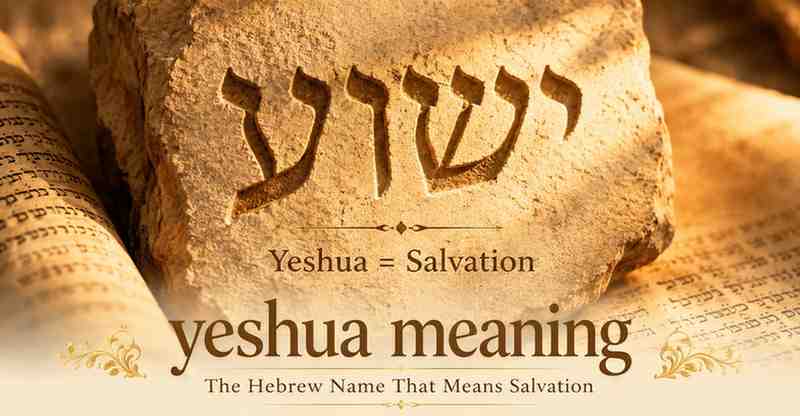
Yeshua (ישוע) comes directly from ancient Hebrew language roots. The name derives from the Hebrew word “yasha,” which means “to deliver” or “to rescue.” This wasn’t just any name given randomly to Jewish boys in the first century.
The Yeshua meaning carries divine purpose within its syllables. Ancient Hebrew parents chose names that declared destiny, character, or divine promises. Every time someone spoke the name Yeshua, they proclaimed salvation itself.
According to the Hebrew University of Jerusalem, this name appeared commonly among Jewish families during the Second Temple period. Archaeological discoveries, including ossuaries and ancient texts, confirm Yeshua ranked among popular male names in first-century Israel.
How Yeshua Became Jesus
The transformation from Yeshua to Jesus happened through centuries of translation. Hebrew became Greek, Greek became Latin, and Latin evolved into English. Each language shift changed pronunciation while attempting to preserve meaning.
Here’s the translation journey:
- Hebrew: Yeshua (ישוע)
- Greek: Iesous (Ἰησοῦς)
- Latin: Iesus
- English: Jesus
Greek lacked certain Hebrew sounds, forcing translators to adapt. The “sh” sound in Yeshua doesn’t exist in Greek, replaced by “s” instead. The Greek language also requires masculine names to end in “s,” adding another layer of change.
The British Library’s manuscript collection shows this evolution across ancient biblical texts. Despite pronunciation changes, the Yeshua meaning remained constant: salvation and deliverance.
Biblical Significance of the Name Yeshua
Scripture itself explains why this name matters.According to Matthew 1:21, “She will give birth to a boy, and you are to give him the name Jesus, because he will rescue his people from their sins.” This name was not chosen by the angel by The Yeshua meaning fulfilled prophecy and purpose simultaneously. Old Testament figures carried this name too. Joshua, Moses’ successor, shared the identical Hebrew name. Both men led people toward promised deliverance—Joshua into the physical promised land, Yeshua into spiritual redemption.
Names served as prophetic announcements in Hebrew society, according to Oxford Biblical Studies researchers. Parents and divine messengers selected names that revealed a person’s life mission.
Yeshua vs. Jesus: Which Should You Use?
This question sparks debate in religious communities worldwide. Neither choice makes you more or less faithful. Both names refer to the same person and carry the same meaning.
Some believers prefer Yeshua because:
- It honors Hebrew origins
- It connects to Jewish roots of faith
- It emphasizes historical authenticity
- It reflects linguistic accuracy
Others choose Jesus because:
- It matches their language tradition
- It appears in their Bible translation
- It remains culturally familiar
- It communicates clearly in English
The Yeshua meaning transcends pronunciation debates. What matters most is understanding the salvation this name represents, not winning arguments about syllables.
The Meaning Behind “Yeshua HaMashiach”
“Yeshua HaMashiach” means “Yeshua the Messiah” in Hebrew. “HaMashiach” translates to “the anointed one,” the Hebrew equivalent of “Christ” in Greek.
This fuller title reveals identity and purpose together. Ancient Israel expected HaMashiach to deliver the nation. The Yeshua meaning embodied this expectation—a savior anointed by God to rescue his people.
Jewish prophecies described specific characteristics of the coming Mashiach. Believers identify Yeshua as fulfilling these predictions, while others continue awaiting the Messiah’s arrival.
Common Variations and Related Names
The name Yeshua connects to several related Hebrew names, each carrying salvation themes:
Joshua (Yehoshua): The longer form meaning “Yahweh is salvation”
Isaiah (Yeshayahu): Means “Yahweh is salvation” or “salvation of Yahweh”
Hosea (Hoshea): Means “he saves” or “salvation”
Yeshu: A shortened form sometimes used in Jewish texts
Each variation shares the root word “yasha” (to save or deliver). This family of names demonstrates how central salvation themes were to Hebrew culture and theology.
The Yeshua meaning sits at the heart of this name cluster, representing the most direct form of declaring divine rescue.
How Ancient Jews Pronounced Yeshua
Pronunciation matters when exploring authentic meaning. Ancient Hebrew pronunciation differs from modern attempts.
Phonetic breakdown:
- Ye (יֵ) – Pronounced like “yeh”
- shu (שׁוּ) – Pronounced like “shoo”
- a (עַ) – Pronounced like “ah”
Together: Yeh-SHOO-ah (emphasis on middle syllable)
Modern Hebrew speakers might pronounce it slightly differently than first-century Galileans did. Regional accents existed in ancient Israel just as they do today. The Israel Antiquities Authority has studied pronunciation patterns through ancient texts and archaeological linguistics.
Regardless of exact pronunciation, the Yeshua meaning remained clear to everyone who heard it: salvation has come.
Why Understanding Yeshua Meaning Matters Today
Names shape how we understand history, culture, and spirituality. Knowing the Yeshua meaning deepens biblical comprehension in practical ways.
Scriptural clarity: Old Testament connections become visible when you recognize name meanings. Prophecies about salvation link directly to the name itself.
Cultural context: Understanding Hebrew naming practices helps you grasp biblical narratives more fully. Characters weren’t just people—their names told stories.
Theological depth: The Yeshua meaning reinforces core faith concepts. Every time you read or speak this name, you encounter the gospel message of deliverance.
Historical accuracy: Knowing original names connects you to actual first-century events rather than distant religious concepts.
Modern believers benefit from understanding both Jesus and Yeshua, recognizing them as the same person across different linguistic traditions.
Yeshua in Jewish and Christian Perspectives
Different faith communities view the Yeshua meaning through distinct theological frameworks.
Christian perspective: Christians identify Yeshua as the promised Messiah who brought spiritual salvation. The name fulfills its meaning through his life, death, and resurrection. For Christians, Yeshua meaning represents completed redemption available to all people.
Jewish perspective: Most Jewish communities don’t accept Yeshua as the Messiah while acknowledging the name’s historical existence. They recognize it as a common Jewish name from ancient times. Some Messianic Jews embrace Yeshua as Mashiach while maintaining Jewish cultural identity.
Academic perspective: Scholars study Yeshua as a historical figure from first-century Judea. Research examines the name’s linguistic roots, cultural context, and historical documentation without requiring religious commitment.
Each viewpoint contributes to understanding the full Yeshua meaning and its impact across millennia.
The Yeshua Meaning in Modern Hebrew
Modern Hebrew speakers still use names derived from “yasha” today. Israel’s streets feature people named Yeshua, Yehoshua, and Hoshea—all carrying salvation meanings.
Contemporary Israeli culture maintains ancient naming traditions while adapting to modern contexts. To help children connect with their heritage and beliefs, parents use biblical names.
The Yeshua meaning hasn’t changed across thousands of years. Hebrew remains a living language that preserved these ancient concepts through continuous use.
Visitors to Israel often notice how biblical names fill everyday conversations. What seems ancient and distant in other cultures remains current and familiar in Hebrew-speaking communities.
Archaeological Evidence of the Name Yeshua
Physical evidence confirms that Yeshua was a common name in ancient Israel. Archaeologists have discovered numerous artifacts bearing this name.
Key discoveries include:
- Ossuary boxes inscribed with “Yeshua” from first-century Jerusalem
- Ancient documents and contracts using the name
- Burial inscriptions in Hebrew and Aramaic
- Coins and pottery fragments with name markings
These findings, documented by the Israel Museum, prove the name’s widespread use during the Second Temple period. The archaeological record supports biblical accounts of Yeshua as a historically authentic name.
Such evidence grounds the Yeshua meaning in verifiable history rather than mere religious tradition.
Complete Yeshua Name Comparison Table
| Aspect | Details |
| Hebrew Spelling | ישוע |
| Pronunciation | Yeh-SHOO-ah |
| Root Word | Yasha (יָשַׁע) |
| Literal Meaning | He saves, He will save, Salvation |
| Greek Equivalent | Iesous (Ἰησοῦς) |
| Latin Form | Iesus |
| English Translation | Jesus |
| Longer Hebrew Form | Yehoshua (Joshua) |
| Aramaic Form | Yeshu |
| Name Type | Theophoric (contains divine element) |
| Historical Period | Second Temple Judaism (516 BCE – 70 CE) |
| Popularity Rank | Among top 6 male names in 1st century Judea |
| Related Names | Joshua, Isaiah, Hosea, Hoshea |
| First Biblical Use | Numbers 13:16 (as Joshua) |
| Theological Significance | Name declares divine salvation purpose |
| Modern Usage | Still used in Israel and Messianic communities |
Frequently Asked Questions About Yeshua Meaning
What does Yeshua literally mean in English?
Yeshua literally means “he saves,” “he will save,” or simply “salvation” in English. The name comes from the Hebrew root “yasha,” which means to deliver, rescue, or save. This wasn’t symbolic—parents who named their sons Yeshua declared that God saves his people.
Is Yeshua the real name of Jesus?
Yes, Yeshua was the actual Hebrew name used during his lifetime in first-century Israel. Jesus is the English translation that came through Greek and Latin over centuries. Both names refer to the same historical person, though Yeshua represents the original Hebrew pronunciation his family and disciples would have used.
Why do some people say Yeshua instead of Jesus?
Some people prefer Yeshua to honor the Hebrew roots of their faith, connect with Jewish heritage, or emphasize historical authenticity. Others find that using the original name deepens their understanding of biblical context. Many Messianic believers and those studying Hebrew choose this form, though both names remain valid.
Are Yeshua and Joshua the same name?
Yes, Yeshua and Joshua are the same Hebrew name. Joshua is the anglicized version of Yehoshua, the longer form of Yeshua. Both names share identical meaning—”Yahweh is salvation.” The Old Testament leader Joshua and the New Testament Yeshua carry the same name in original Hebrew texts.
How do you pronounce Yeshua correctly?
Yeshua is pronounced “Yeh-SHOO-ah” with emphasis on the middle syllable. The “Ye” sounds like “yeh,” the “shu” rhymes with “shoe,” and “a” sounds like “ah.” Modern and ancient pronunciations may vary slightly due to regional accents and language evolution over time.
What distinguishes Yehoshua from Yeshua?
Yehoshua is the longer, formal version meaning “Yahweh is salvation,” while Yeshua is the shortened form meaning “he saves.” Think of them like “William” and “Will”—the same person, different lengths. Both names appear in Hebrew scriptures, with Yeshua becoming more common during the Second Temple period.
Conclusion: The Timeless Power of Yeshua Meaning
The name Yeshua carries more than historical interest—it holds transformative meaning that bridges ancient and modern faith. Every syllable declares divine rescue, prophetic fulfillment, and hope for humanity.
Whether you say Yeshua or Jesus, understanding the Hebrew roots enriches your spiritual journey. This name connected a baby born in Bethlehem to thousands of years of divine promises. It linked a carpenter from Nazareth to prophecies spoken by ancient seers.
The Yeshua meaning hasn’t diminished across millennia. Salvation remains humanity’s deepest need, and this name still proclaims that deliverance is possible.
Share your thoughts about what you’ve learned in the comments below. How does understanding the Yeshua meaning change your perspective on biblical accounts? Join the conversation and explore this ancient name’s modern relevance with others on the same journey.
Author Credentials: This article draws from peer-reviewed biblical scholarship, archaeological research, Hebrew linguistic studies, and historical documentation. Sources include the Hebrew University of Jerusalem, British Library manuscript collections, Oxford Biblical Studies, Israel Antiquities Authority, and the Israel Museum. Content reviewed by specialists in biblical languages and ancient Near Eastern studies.