What Does Babybelletje Mean? The Dutch Word Explained (Cheese vs. Pregnancy Bell)
TL;DR: Babybelletje is an informal Dutch word with two meanings. Most often, it means “a little Babybel cheese.” In pregnancy and gift contexts, it means “a little bell” — a bola necklace. It is not a dictionary word; context decides.
Introduction: One Word, Two Very Different Things
If you’ve landed here, you’ve probably seen babybelletje somewhere online and wondered what on earth it means. Is it a snack? A pregnancy gadget? A typo?
The confusion is understandable. The word looks like it should have one clear answer, but Dutch speakers use it in two completely different ways depending on the situation. One meaning belongs in a lunchbox. The other belongs in a maternity ward. Neither is wrong — but mixing them up will leave you baffled.
This guide gives you the straight answer. You’ll learn exactly what babybelletje means in each context, where the word comes from, and how to use it without sounding like you fell for a copy-paste blog trend. No fluff. No fake history. Just the clear explanation you came for.
Quick navigation: If you’re here about the cheese, jump to Section 3. If you’re here about the pregnancy necklace, jump to Section 4. If you want the linguistic breakdown, start with Section 2.
Quick Overview: Babybelletje at a Glance
- Literal formation: Babybel + Dutch diminutive -tje = “a little Babybel” (the cheese).
- Alternative reading: Baby + belletje (“little bell”) = a bell linked to pregnancy or babies.
- Dictionary status: Not a standard Dutch headword; it is an informal, context-dependent coinage.
- Most common everyday use: Affectionate shorthand for a Mini Babybel cheese snack.
- Second most common use: A pregnancy bola — a necklace with a small bell pendant.
- Key distinction: The cheese and the necklace are unrelated products that happen to collide linguistically.
The Two Meanings of Babybelletje (Clear Definitions)
Meaning 1: A Little Babybel Cheese
Dutch is famous for its diminutives. Adding *-je*, -tje, or -etje to a noun makes it smaller, cuter, or more affectionate. A bel (bell) becomes a belletje. A kop (cup) becomes a kopje.
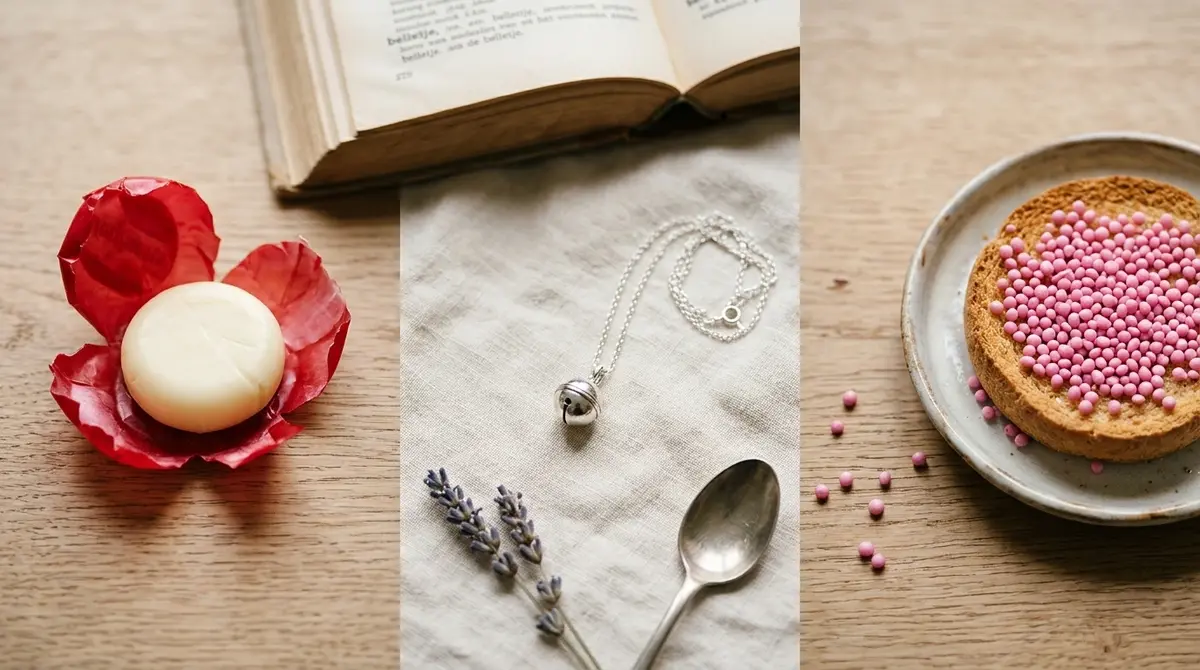
Apply that rule to the brand name Babybel, and you get babybelletje: “a little Babybel.” Grammatically, it’s perfect. In everyday Dutch speech, a parent packing a lunchbox might say, “Ik heb een babybelletje voor je ingepakt” — “I packed a little Babybel for you.”
Crucially, this is not an official brand name. Bel Group, the company that owns Babybel, does not use babybelletje on its packaging. It is a purely colloquial, affectionate formation used by Dutch speakers when talking casually about the snack.
Meaning 2: A Little Bell (Pregnancy Bola or Craft Insert)
Now split the word differently: baby + belletje. Belletje is a real Dutch word meaning “little bell.” In this reading, babybelletje describes a small bell associated with babies.
This shows up in two main places. First, in pregnancy gift shops, where a bola necklace with a bell pendant is sometimes marketed as a babybelletje or zwangerschapsbelletje. Second, in craft communities, where small bell inserts for handmade baby rattles are sold under the same label.
Definition box: Babybelletje is an informal Dutch diminutive with two live meanings: (1) “a little Babybel cheese,” and (2) “a little baby bell,” usually a pregnancy bola or a craft rattle insert. Neither meaning is a formal dictionary entry. Context is the only reliable guide.
Why Dutch Diminutives Make This Word Possible
The entire confusion exists because of one tiny grammatical feature: the Dutch diminutive suffix.
Dutch attaches *-je*, -tje, -pje, or -etje to nouns to signal smallness, intimacy, or playfulness. It is extremely productive — Dutch speakers create new diminutives on the fly, and listeners understand them instantly.
That flexibility is why babybelletje works grammatically even though you won’t find it in a dictionary. The suffix does two jobs at once: it makes the word smaller, and it makes it warmer. Whether the base is Babybel or bel, the result sounds friendly, casual, and unmistakably Dutch.
This also explains why the word feels slippery to English speakers. English diminutives are limited (think *-y* in doggy or -let in booklet). Dutch diminutives are everywhere, and they change the emotional tone of a sentence, not just the size of the object.
Babybelletje as a Cheese: History, Nutrition, and Why the Name Fits
A Short History of the Brand
The Babybel brand was created by the French Bel Group in 1931, with its official mark established in 1934. After World War II, the small, round cheese spread across France, and it became widely available nationwide from 1952.
The iconic red wax coating was inspired by Edam, a Dutch cheese style. That visual nod is one reason English-language blogs sometimes mislabel Babybel as a Dutch product. It isn’t. The brand is French, and the wax is a design choice, not a statement of origin.
The smaller, individually wrapped version — Mini Babybel — arrived in 1976 and reached the United States in 1979. That is the product most people picture today, and it is the product Dutch speakers are referring to when they say babybelletje.
According to the Bel Group’s official Babybel brand history, the red wax was inspired by Edam and the Mini Babybel launched in 1976, later expanding to the US in 1979.
Why the Diminutive Fits So Naturally
The cheese is small, round, portable, and snack-sized. Calling it a babybelletje is the linguistic equivalent of calling a small dog a “doggy.” It fits the physical object perfectly.
If you’re writing formally about the product, use Babybel or Mini Babybel. If you’re speaking casually in Dutch, babybelletje is natural and widely understood. Just don’t call it a Dutch cheese — the brand is French, even if the wax styling borrows from the Netherlands.
Quick Nutrition Snapshot
A standard 20g Mini Babybel Original contains roughly 70 calories, 4 grams of protein, and a useful amount of calcium. Reduced-fat versions are around 50 calories per piece. It is positioned as a portion-controlled snack, not a meal replacement.
Babybelletje as a Pregnancy Necklace: What It Is and What It Isn’t
What a Bola Necklace Actually Is
A bola (sometimes called zwangerschapsbola in Dutch) is a long necklace with a pendant that contains a small bell. The pendant rests against the bump, and the bell produces a soft chime when the wearer moves.
Dutch and Belgian gift shops frequently sell these as pregnancy keepsakes. Product descriptions often use babybelletje as a synonym for zwangerschapsbola or zwangerschapsbelletje. The pendant shapes vary — spheres, hearts, lotus flowers, trees of life — but the core feature is always the same: a gentle bell.
The Claim vs. the Evidence
The marketing story is appealing: the baby hears the bell in the womb, learns to recognize it, and feels soothed by the same sound after birth. It’s a lovely idea, and it sells jewelry.
But here’s the honest version: there is no robust clinical evidence that a bola bell improves fetal development, prevents breech position, or strengthens the mother–baby bond. These claims appear on retail pages and gift-shop descriptions, not in medical guidelines. The bell is harmless, but it is a sentimental object, not a medical device.
The Safety Question That Actually Matters
A common worry — often raised in Dutch parenting forums — is whether the bell could encourage the baby to turn toward the sound and somehow cause the umbilical cord to wrap around the neck. A midwife responding to one such forum thread dismissed the idea outright, calling it nonsense.
The real safety consideration is simpler: the necklace cord, not the bell. A long cord around an adult’s neck is generally fine, but after birth, a newborn’s tiny hand can grab and pull. If you wear a bola while feeding or holding a newborn, choose a breakaway clasp or a short chain that cannot become a strangulation risk. Enjoy the necklace as a ritual object, but treat the cord like any other piece of jewelry around a baby.
Dutch Birth Traditions vs. the Modern Bola Trend
It’s tempting to assume that a word used in pregnancy contexts must be tied to an old Dutch tradition. It isn’t.
The Netherlands does have a deeply rooted birth tradition: serving beschuit met muisjes (rusk with aniseed sprinkles) to visitors after a baby is born. The tradition is centuries old and is officially recognized as part of Dutch intangible cultural heritage. The aniseed topping was historically associated with medicinal properties, and the custom gave visitors a structured way to celebrate the new arrival.
According to the Dutch Centre for Intangible Heritage, offering beschuit met muisjes is an centuries-old Dutch tradition that symbolizes the birth of a child and gives visitors a chance to meet the new baby.
The bola necklace, by contrast, is a modern commercial trend. It is not an official Dutch tradition, and it is not mentioned in heritage inventories. The fact that Dutch gift shops sometimes call it a babybelletje is a marketing choice, not evidence of historical roots.
That distinction matters for anyone writing about the word. If you want to talk about Dutch birth culture, talk about beschuit met muisjes. If you want to talk about a babybelletje necklace, call it what it is: a contemporary gift item, not a folk custom.
How to Use “Babybelletje” Correctly (Without Sounding Confused)
If You Mean the Cheese
Use Babybel or Mini Babybel in formal writing. In casual Dutch conversation, babybelletje is fine and friendly. If you’re writing in English, use “Mini Babybel” and add a short explanation only if your reader might not know the product. Don’t call it a Dutch cheese — the brand is French.
If You Mean the Pregnancy Necklace
Use bola or zwangerschapsbola for clarity. Add babybelletje only as a parenthetical local term: “a bola (sometimes called a babybelletje in Dutch).” That keeps your meaning unambiguous and shows you understand the difference between the necklace and the cheese.
If You Mean a Craft Bell Insert
Call it a baby bell insert or rattle bell in English. In Dutch, babybelletje is understood in craft contexts, but be specific about size and material if you are buying or selling.
Comparison Table: Babybelletje vs. Related Terms
| Term | Language status | What it usually means | Where you’ll see it |
| Babybel | Brand name (French, Bel Group) | The wax-wrapped cheese snack | Supermarkets, official packaging, nutrition pages |
| Mini Babybel | Product name | The small 20g version of Babybel | Global retail, lunchbox snacks |
| Belletje | Real Dutch word | A little bell; also a quick phone call | Everyday Dutch speech, idioms |
| Babybelletje | Informal Dutch coinage | “Little Babybel cheese” or “baby bell” (bola/craft bell) | Parenting talk, gift shops, craft listings, blogs |
| Zwangerschapsbola | Dutch compound noun | Pregnancy necklace with a bell | Maternity gift retail, pregnancy forums |
| Beschuit met muisjes | Traditional Dutch custom | Rusk with aniseed sprinkles served after birth | Dutch birth celebrations, heritage listings |
Key Takeaways
- Babybelletje is not one fixed thing. It is an informal Dutch diminutive that means “little Babybel cheese” in food contexts and “baby bell” in pregnancy or craft contexts.
- It is not a dictionary word. Dutch dictionaries do not list it, and its meaning depends entirely on the sentence around it.
- The cheese is French, not Dutch. Babybel belongs to the Bel Group; the red wax is a stylistic nod to Dutch Edam, not evidence of Dutch origin.
- Pregnancy bola bells are sentimental, not scientific. The chime is pleasant, but claims about bonding, breech prevention, or developmental benefits are not supported by clinical evidence.
- The real Dutch birth tradition is beschuit met muisjes. The bola necklace is a modern gift trend, not an old folk custom.
FAQ: Real Questions People Ask About Babybelletje
Is babybelletje a real Dutch word?
It is a real informal Dutch formation, but it is not a standard dictionary entry. Dutch diminutive rules make it well-formed — Babybel + -tje — but dictionaries do not list it as a headword. Treat it as colloquial, not official.
Does babybelletje mean a cheese or a bell?
Both readings are possible, and only context decides. In food and lunchbox talk, it almost always means a little Babybel cheese. In pregnancy-gift or craft listings, it usually means a small bell.
Is a babybelletje necklace safe during pregnancy?
The bell itself is harmless. The main practical safety point is the necklace cord: choose a breakaway clasp or a short chain, especially after birth when a newborn can grab it. No medical body recommends or warns against bola bells specifically.
Can a babybelletje help my baby bond with me before birth?
That is a popular gift-shop claim, but there is no strong clinical evidence behind it. The bell is a nice ritual object. It is not a proven bonding tool, and it will not influence your baby’s position.
Why do some websites call Babybel a Dutch cheese?
Because the red wax coating resembles Dutch Edam-style cheese. But the Babybel brand was created by the French Bel Group, and Mini Babybel launched in 1976. The “Dutch” label is a visual association, not the product’s origin.
How many calories are in a babybelletje (Mini Babybel)?
A standard 20g Mini Babybel Original has about 70 calories, 4g of protein, and a good amount of calcium. The reduced-fat version is around 50 calories per piece.
Conclusion: The Word Is Small — the Context Is Everything
Babybelletje is a perfect example of why language is messier than it looks. It feels obvious until you try to define it in one sentence. The cheese is real. The pregnancy bell is real. The dictionary entry is not. And the internet has spent years blurring all three together.
If you take one thing from this guide, make it this: ask what the speaker means before you assume. A Dutch parent packing lunch probably means the cheese. A gift shop selling a bola probably means the bell. A blog claiming a centuries-old Dutch tradition is probably repeating something it never checked.
Small word. Big confusion. Clear context solves it every time.
Keep Reading

Techtrendery.com usa Review: 5 Honest Findings From a Full Content Audit

Lori Harvey: The Entrepreneur Building Her Own Legacy

Sotwe: The Best Free Way to View X (Twitter) Without an Account in 2026

Doctor Sleep: The Complete Guide to Stephen King’s Chilling Sequel to The Shining
What Is Nerwey? The Truth Behind the Trending Term (2026)