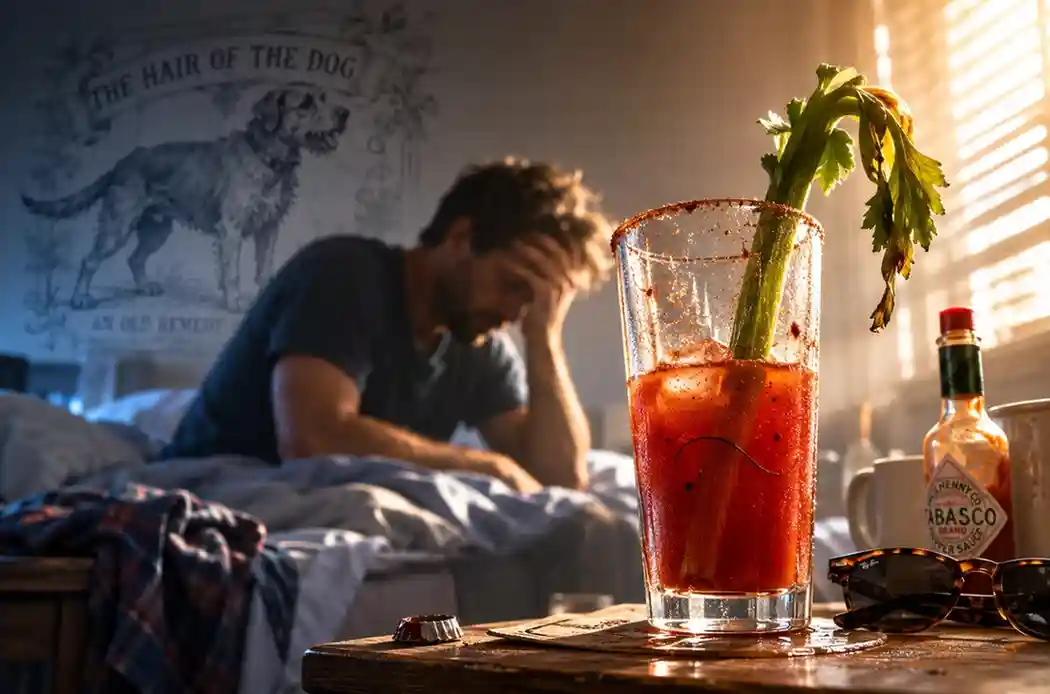
Hair of the Dog Meaning: Why Morning Drinking Isn’t the Cure You Think
You wake up with a pounding headache, dry mouth, and a stomach that feels like a washing machine. Your roommate slides a Bloody Mary across the table and smirks, “Hair of the dog.” Before you take that sip, you need the real hair of the dog meaning. That drink won’t heal you. It delays the crash. This guide unpacks the phrase’s strange history, what science says about morning-after alcohol, and exactly how to recover safely instead of extending the damage.
What Is the Hair of the Dog Meaning?
The hair of the dog meaning is simple on the surface: drinking more alcohol to cure a hangover. It’s the idea that a small amount of the same substance that made you sick will ease the symptoms the next day. The full expression is “hair of the dog that bit you,” taken straight from an old medical superstition. You treat the bite by applying hair from the same dog to the wound. Applied to hangovers, the “bite” is last night’s booze, and the “hair” is a morning drink.
This phrase doesn’t describe real medicine. It’s a cultural artifact, a folk belief that survives in brunch menus and late-night party logic. Understanding the hair of the dog meaning means recognizing it as a hangover management myth—not a cure.
Where Did the Phrase ‘Hair of the Dog’ Originate?
The hair of the dog meaning traces back to medieval Europe, long before anyone mixed a morning cocktail. People believed that putting hair from the dog that bit you into a wound would prevent infection or madness. This isn’t a joke. An old medical manuscript, the Ebers Papyrus from ancient Egypt, mentions similar sympathetic magic, but the rabies connection took hold later.
In his 1546 book A Dialogue Conteinyng the Nomber in Effect of All the Prouerbes in the Englishe Tongue, John Heywood recorded the phrase “hair of the dog that bit us” as a literal rabies remedy. By the 18th century, the idea jumped to alcohol. If a “bite” of liquor hurt you, another drink would soothe the pain. The hair of the dog meaning transformed from a dangerous rabies treatment into a dangerous drinking habit.
External source: Oxford English Dictionary entry on “hair of the dog” traces first recorded figurative use to 1546.
External source: National Institute on Alcohol Abuse and Alcoholism (NIAAA) references historical hangover myths in its publication Hangovers.
The Folk Medicine Behind ‘Hair of the Dog That Bit You’
Ancient healers believed in curing like with like. That principle, called sympathetic magic, powered the hair of the dog meaning for centuries. If a rabid dog bit someone, a paste made from its burnt hair supposedly drew out the poison. People also placed the offending dog’s hair directly into the wound.
When heavy drinking became a common social problem, the language slid over naturally. A splitting headache and nausea after a night of ale were seen as a “bite” from alcohol. The “hair” became a small glass of the same drink that caused the misery. This logic feels comforting, but it ignores how the body processes toxins. The hair of the dog meaning never had a biological basis. It’s a linguistic fossil from a time before germ theory.
How Does ‘Hair of the Dog’ Supposedly Work for a Hangover?
Proponents claim the hair of the dog method works because alcohol temporarily masks withdrawal symptoms. Here’s the mechanical story your brunch buddy believes:
- Alcohol depresses the central nervous system.
- As the body metabolizes ethanol, it produces acetaldehyde, a toxic compound that triggers inflammation, nausea, and rapid heartbeat.
- Drinking again slows the breakdown of acetaldehyde and releases a small dopamine spike, dulling the misery for an hour or two.
That’s not healing. That’s a stalling tactic. The hair of the dog meaning becomes clear when you separate symptom suppression from recovery. Your liver still has to process last night’s backlog plus the new dose. Every sip adds more poison to a system already overwhelmed. Morning drinking simply pushes the hangover to later in the day, often making it worse.
What Science Says About Drinking Through a Hangover
No major medical institution endorses the hair of the dog approach. A 2010 review in the journal Alcohol and Alcoholism examined hangover cures and found zero evidence that more ethanol provides a net benefit beyond fleeting relief. Scientists point to three core problems:
- Acetaldehyde build-up — The liver can only process about one standard drink per hour. Adding alcohol prolongs acetaldehyde exposure, which is linked to cellular damage, DNA destruction, and increased cancer risk.
- Dehydration intensification — Alcohol is a diuretic. A morning drink doesn’t replace fluids lost overnight; it exacerbates electrolyte imbalance.
- Inflammatory cascade — Hangovers are partly an immune response. Alcohol metabolism triggers cytokine release. Drinking more ethanol reignites that inflammation rather than cooling it down.
The hair of the dog meaning from a scientific lens isn’t cute. It’s a cycle of cellular stress dressed up as a cure.
External source: Alcohol and Alcoholism journal, “The Pathology of Alcohol Hangover” (2010) discusses lack of evidence for ethanol as treatment.
External source: Mayo Clinic, “Hangovers: Diagnosis & Treatment,” advises against more alcohol to relieve symptoms.
The Risks of Using Alcohol as a Hangover Cure
Treating a hangover with alcohol can turn a one-morning mistake into a habit. The hair of the dog meaning carries serious health warnings many ignore.
- Alcohol use disorder pathway — Regular morning drinking conditions the brain to associate relief with ethanol, increasing dependency risk.
- Masking serious conditions — Chronic headache, nausea, and fatigue may signal pancreatitis, gastritis, or liver disease. Drowning them in booze delays diagnosis.
- Accidents and poor decisions — A Bloody Mary at 9 a.m. still impairs judgment. Driving under any influence after a heavy night puts lives at risk.
- Cardiovascular strain — Alcohol raises blood pressure and heart rate. Adding more to an already dehydrated, electrolyte-depleted body stresses the heart.
The hair of the dog meaning becomes dangerous when it normalizes treating a toxin with more of the same toxin. You’re not a medieval villager scared of rabies. You have access to water, electrolytes, and rest.
Common Hair of the Dog Cocktails and Their Names
Bars and restaurants turned the hair of the dog meaning into a marketing opportunity. Several classic morning-after drinks promise revival. Here’s a quick table of popular “hair of the dog” cocktails and what they actually deliver.
| Cocktail | Key Ingredients | The Theory Behind It | What It Really Does |
| Bloody Mary | Vodka, tomato juice, spices, lemon | Vitamin C and savory flavors settle the stomach while vodka takes the edge off. | Tomato juice provides some hydration and antioxidants; vodka delays hangover. |
| Mimosa | Champagne, orange juice | Light, bubbly, and fruit-based feels gentle. | Acidity from OJ irritates an upset stomach; bubbles speed alcohol absorption. |
| Corpse Reviver No. 2 | Gin, Cointreau, Lillet Blanc, lemon, absinthe | Strong herbal and citrus mix supposedly revives the senses. | High alcohol content overwhelms an already taxed liver. |
| Prairie Oyster | Raw egg, Worcestershire sauce, tomato juice, vinegar (sometimes brandy) | Protein and tangy flavors replenish nutrients; raw egg supposedly coats the stomach. | No scientific evidence of cure; raw egg carries salmonella risk. |
| Michelada | Beer, lime juice, hot sauce, Worcestershire | Beer’s lower ABV feels “safer”; spices wake up the palate. | Carbonation and irritants may worsen nausea; alcohol still dehydrates. |
These drinks taste good, but none reverse a hangover. The hair of the dog meaning in cocktail form stays exactly that—meaning, not medicine.
How Different Cultures Handle Hangover Relief
Not every culture reaches for a drink the morning after. Comparing global hangover traditions highlights the gap between the hair of the dog meaning and scientifically sensible recovery.
- Japan: Umeboshi and miso soup — Pickled plums and fermented soybean soup replenish sodium, potassium, and amino acids lost to alcohol’s diuretic effect. No ethanol involved.
- Germany: Rollmops — Pickled herring wrapped around a gherkin delivers protein, omega-3s, and electrolytes. People call it a Katerfrühstück (hangover breakfast), and it doesn’t require a beer.
- Mexico: Menudo — A tripe stew with chili and hominy that supplies gelatin, fat, and capsaicin to soothe the gut and reduce inflammation.
- Poland: Sour rye soup (Żurek) — Fermented rye flour broth gives probiotics and electrolytes, completely devoid of additional alcohol.
- England: Full English breakfast (sometimes with a lager) — Eggs, bacon, sausage, beans, and toast provide protein and carbs. When a lager joins the plate, the hair of the dog meaning slips back in.
Notice the pattern. Traditional hangover meals focus on hydration, mineral balance, and easily digestible nutrients. They don’t demand more booze.
Healthier Alternatives to the Hair of the Dog Method
You can speed hangover recovery without touching another drink. Replace the hair of the dog meaning with actions that actually repair your body.
- Use electrolytes to stay hydrated; water is insufficient on its own. . Coconut water, oral rehydration salts, or a banana-spinach smoothie restores potassium and sodium faster.
- Eat complex carbs and protein — Whole grain toast with eggs stabilizes blood sugar and provides cysteine, an amino acid that helps break down acetaldehyde.
- Take a B-complex vitamin — Alcohol depletes thiamine and B12. A morning supplement or fortified cereal supports energy metabolism.
- Sleep, don’t “power through” — The glymphatic system cleans brain waste during deep sleep. An extra 90-minute nap does more than any cocktail.
- Try ginger or peppermint — Ginger tea reduces nausea; peppermint calms stomach spasms. Both are zero-alcohol, liver-friendly aids.
- Use ibuprofen sparingly — It eases headache and muscle aches but can irritate the stomach lining. Avoid acetaminophen (Tylenol) within 24 hours of heavy drinking—combined with alcohol, it damages the liver.
These methods align with what emergency physicians and sports nutritionists recommend. The hair of the dog meaning fades when real relief is this accessible.
Why the Hair of the Dog Myth Persists
Despite the evidence, millions still repeat the phrase and reach for a morning beer. The hair of the dog meaning endures for psychological and social reasons.
- Immediate relief illusion: A tiny quantity of alcohol causes dopamine to be released, which momentarily lessens the anxiety and tremor associated with mild withdrawal. . That quick fix feels like proof, even though it’s short-lived.
- Social bonding — Brunch culture romanticizes Bloody Marys and mimosas. Sharing a morning drink normalizes behavior that would otherwise seem alarming.
- Celebrity and media reinforcement — Movies and shows often depict the “hangover cure” drink as humorous or sophisticated, reinforcing the hair of the dog meaning without showing the real consequences.
- Tradition inertia — The phrase is almost 500 years old. It has texture, humor, and a rebellious edge that plain advice lacks. “Rehydrate with electrolytes” simply does not sound as good. Belief clings because the alternative requires discipline. But acknowledging the hair of the dog meaning as a cultural echo, not a treatment, is the first step toward better mornings.
When to Seek Medical Help for a Hangover
Severe hangovers sometimes mask alcohol poisoning or dangerous blood sugar drops. Watch for these signs that go beyond needing to know the hair of the dog meaning:
- Stupor or confusion that persists for hours after quitting alcohol
- Seizure or uncontrollable shaking
- Vomiting that won’t stop, especially if it contains blood or looks like coffee grounds
- Extremely slow or irregular breathing (fewer than 8 breaths per minute)
- Skin that feels cold, clammy, or turns bluish
- Inability to keep down any fluids
If any of these appear, skip the home remedies and get to an emergency department immediately. Alcohol poisoning can be fatal without prompt medical intervention.
Final Thoughts: Rethinking the Hair of the Dog Approach
The hair of the dog meaning tells a vivid story about human beings: we love shortcuts, we trust folklore, and we desperately want an easy exit from self-inflicted pain. But biology doesn’t negotiate. That morning drink pauses the clock; it never rewinds it. Next time you wake up with regret, skip the cocktail and reach for water, food, and rest. Your liver, brain, and heart will thank you. Share this article with a friend who still believes in the myth—or better yet, send it before their next night out. Have a hangover remedy that actually works? Drop it in the comments. Real recovery deserves a louder voice than a 500-year-old slogan.
Frequently Asked Questions About the Hair of the Dog Meaning
1. What does hair of the dog meaning actually refer to?
The hair of the dog meaning refers to the folk remedy of drinking more alcohol to cure a hangover, based on the old belief of treating a dog bite with hair from the same dog. It describes symptom suppression, not a genuine cure.
2. Is drinking in the morning to cure a hangover ever safe?
No. Medical experts warn that morning drinking only delays hangover symptoms, increases acetaldehyde exposure, and raises the risk of developing an alcohol use disorder. It never treats the root cause of dehydration, inflammation, and poor sleep.
3. Where does the full phrase hair of the dog that bit you come from?
It originates from a medieval rabies treatment. People applied burnt hair from a rabid dog to the bite wound, believing it would draw out the poison. The phrase transferred to drinking culture by the 18th century as a metaphor for curing one poison with more of the same.
4. Why do some people feel better after a morning drink?
A small amount of alcohol temporarily masks mild withdrawal symptoms like anxiety and tremors by boosting dopamine. This relief is brief and worsens the eventual crash once the new alcohol metabolizes.
5. What are the safest hangover cures instead of hair of the dog?
Electrolyte-rich fluids, a nutrient-dense meal with protein and complex carbs, extra sleep, and gentle nausea relievers like ginger tea provide real recovery without toxic stress on the body.
6. How can I help a friend understand the real hair of the dog meaning?
Share this article or explain the science plainly: drinking more alcohol only adds poison to an already overwhelmed system. Point them toward hydration, rest, and food. A quick dopamine spike doesn’t equal healing.
Author: Jordan Kasper, health and wellness writer with 11 years covering substance use, nutrition, and medical folklore.
Medical reviewer: Dr. Amara Chen, board-certified emergency medicine physician.