What Does “Head Over Heels” Mean? Origin, Usage, and Real-Life Examples
You hear someone say they’re “head over heels” and pause. Is it about a clumsy fall or deep passion? Misusing this phrase can muddle your message, especially in writing or social settings. This guide unlocks the real head over heels meaning, traces its unexpected history, and gives you the power to use it flawlessly.
What Does “Head Over Heels” Mean? (Short Definition)
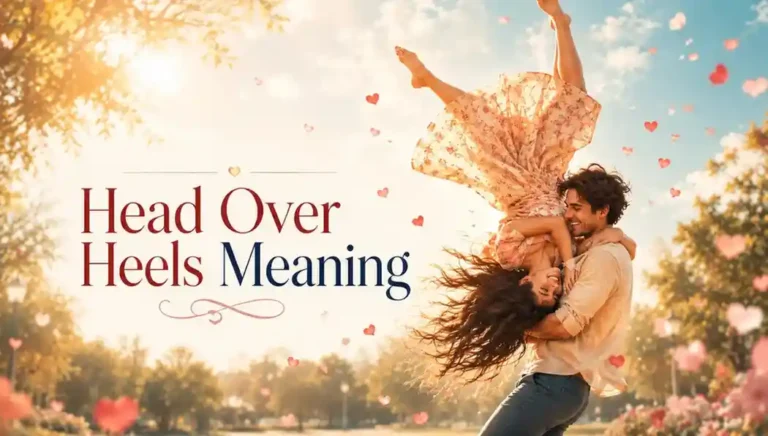
The head over heels meaning is straightforward yet powerful. It describes a state where someone is completely and uncontrollably in love, infatuated, or deeply excited about something. When you are head over heels, your emotions have flipped your world upside down. You are not just fond of a person, idea, or activity—you are entirely absorbed by it.
- Primary meaning: Deeply in love or romantically infatuated.
- Extended meaning: Utterly enthusiastic or obsessed with a non-romantic interest, such as a hobby, career move, or new gadget.
Dictionaries like Merriam-Webster define “head over heels” as “in or as if in a somersault” and, figuratively, “very much in love.” The figurative use now dominates daily English.
The Surprising Origin Story of “Head Over Heels”
“Head over heels” was not the original phrase. Centuries ago, English speakers said “heels over head.” This described an actual physical tumble—someone flipping so their heels were above their head. The 14th-century poem Patience uses “heels over head” to paint a chaotic fall. The phrasing made sense: in a somersault or a stumble, your heels literally rise above your head.
By the late 18th century, the order reversed. Writers began using “head over heels,” even though it describes the normal upright position. Language experts at The Phrase Finder note this illogical swap was likely driven by the rhythm of the words—it simply sounded better. The new form retained the original feeling of being turned upside down, and by the early 19th century, love poets and letter writers adopted it as a metaphor for emotional turmoil. The head over heels meaning shifted from a physical spill to romantic surrender.
How an Inverted Phrase Flipped Its Meaning Over Time
The journey from “heels over head” to “head over heels” mirrors how English evolves through sound, not just logic. Even though standing with your head above your heels is normal, the phrase captured the sensation of being spun around by powerful feelings. That emotional chaos became the heart of the modern head over heels meaning.
- 14th–16th century: “Heels over head” appears in Middle English texts for literal falls.
- 1771: “Head over heels” first recorded in print, used in a non-literal way to mean excitedly or completely.
- 19th century: Romantic poets cement the idiom as a declaration of overwhelming love.
- Present day: The phrase works for love, fandom, career passion, and more.
This inversion, strange as it seems, made the idiom stick. People connected it to the dizziness and disorientation that love brings. That emotional truth outshone the factual contradiction.
Head Over Heels in Love: The Most Common Modern Usage
When you hear “head over heels,” romance is almost certainly the subject. This is the head over heels meaning most people need first. Imagine someone meeting their partner’s eyes and feeling their stomach flip—not with fear, but with pure joy. That is the sensation the idiom captures.
Writers, speakers, and songwriters love the phrase because it is vivid and instant. “I’m head over heels for you” packs more emotion than “I like you a lot.” It suggests you have lost your footing in the best possible way. You did not just fall in love; you tumbled, somersaulted, and let the feeling take over completely.
Real-world love examples
- “After their third date, Maria knew she was head over heels.”
- “Even after 20 years, he is completely enamored with his wife.”
- “I have fallen head over heels, but I thought I was only interested.”
Use the phrase with a person as the object, or with “for” + the beloved. This structure keeps your sentence natural and clear.
Head Over Heels Meaning and Examples in Everyday Conversation
Beyond romance, the head over heels meaning stretches to anything that fills you with intense excitement. You can be head over heels for a new job, a creative project, a band, or even a perfect cup of coffee. The thread is total, delighted absorption.
When you use the idiom in casual speech, you signal that your enthusiasm has overtaken your usual restraint. It makes your statement memorable and emotionally charged.
Examples across contexts:
- “My daughter is head over heels about her new dance class.”
- “The team is head over heels for the fresh marketing strategy.”
- “I’m not just enjoying the book—I’m head over heels obsessed with it.”
Notice how the phrase pairs easily with verbs like “be,” “fall,” and “become.” That flexibility helps you adapt the head over heels meaning to nearly any personal or professional story.
Idiom vs. Literal Meaning: Why We Don’t Use It for Actual Falls
Modern English avoids “head over heels” for physical accidents. If you trip on the stairs, you say “I fell headfirst” or “I went heels over head.” Using the idiom to describe a literal fall would confuse your listener, because the head over heels meaning has locked itself firmly into the figurative realm.
- Literal description: “He tumbled heels over head down the slope.” (correct, physical)
- “She is head over heels for the new eatery downtown” is an example of figurative language. (emotional)
The Oxford Learner’s Dictionary confirms the phrase is “used to talk about strong feelings of love.” Sticking to the emotional meaning keeps your communication crisp. Save the literal action for “headfirst,” “headlong,” or “heels over head.”
Synonyms and Similar Expressions to “Head Over Heels”
Sometimes you want a fresh way to express the same depth of feeling. These synonyms carry a similar weight without repeating the idiom.
- Smitten – Suggests being suddenly and strongly attracted. “He was completely smitten after one conversation.”
- Besotted – Implies a foolish, overwhelming love, especially in British English. “She’s absolutely besotted with her puppy.”
- Infatuated – Captures intense but sometimes short-lived passion. “Teenagers often become infatuated quickly.”
- Over the moon – Expresses extreme happiness, closely related to the joy side of the head over heels meaning. “They were over the moon about the engagement.”
- Madly in love – A direct, powerful way to say the same thing. “They’re madly in love and planning a future together.”
- Gaga – Informal and playful, meaning excessively enthusiastic. “I’m gaga over this new phone.”
Choose based on tone. “Besotted” adds a literary touch; “gaga” keeps it light and funny. All these alternatives help you avoid repetition when you write longer stories or social media captions.
Using “Head Over Heels” Correctly: Grammar and Sentence Structure
Getting the grammar right makes the head over heels meaning shine without distraction. Follow these guidelines for flawless usage.
- Pair with the right preposition. Use “for” when naming the target of affection or excitement. “I’m head over heels for the new pastry chef.” In romantic contexts, “in love with” works, too: “I fell head over heels in love with her laugh.”
- Match the verb. Common verbs are “be,” “fall,” “become,” and “feel.” “He fell head over heels the moment they met.”
- Place modifiers carefully. You can intensify the phrase with “completely,” “totally,” or “absolutely.” “She’s completely head over heels for the coastline villa.” Avoid double intensifiers like “totally completely,” which dilute the impact.
- Keep it informal and conversational. The idiom belongs in personal stories, articles, emails, and speeches. You rarely see it in formal reports, except as a quoted personal statement.
A quick self-check: If you can replace “head over heels” with “deeply enthusiastic” and the sentence still feels natural, you have used it correctly.
Cultural Impact: The Idiom in Music, Movies, and Literature
Pop culture has embraced the head over heels meaning and spread it worldwide. Songs, films, and books use the phrase as shorthand for love’s dizzying power.
- Music: Tears for Fears released the hit song “Head over Heels” in 1985, a track that captures romantic obsession and vulnerability. Countless other artists—from pop to country—weave the idiom into lyrics to express helpless devotion.
- Movies and television: Romantic comedies sprinkle “I’m head over heels for you” into grand confessions. The phrase signals a turning point, the moment a character stops guarding their heart.
- Literature: Contemporary romance novels use the idiom to build chemistry between characters. Its physical imagery—falling, tumbling—works well to show emotional surrender without pages of explanation.
This deep cultural foothold makes the idiom instantly recognizable. When you use it, you tap into a shared understanding that crosses generations and genres.
Common Mistakes to Avoid with “Head Over Heels”
Even seasoned speakers slip. Dodge these errors to keep the head over heels meaning exact and powerful.
- Using it for negative emotions: The phrase carries positive excitement. “Head over heels angry” sounds wrong because the idiom lives in the world of love and eager passion. Stick to “furious” or “enraged” for anger.
- Applying it to literal falls: As covered earlier, “head over heels” no longer works for physical tumbles. Choose “headfirst” or “heels over head” instead.
- Misplacing the preposition: Saying “head over heels in him” breaks the pattern. Use phrases like “head over heels in love with him” or “head over heels for him.” Overusing it in one piece: Repeating the idiom three times in a paragraph makes writing feel lazy. Swap in synonyms or restructure sentences to maintain energy.
- Adding unnecessary words: “I’m head over heels for her in a romantic way” is redundant. The idiom already implies romance, so trim the extra explanation.
A mindful writer treats the idiom like a spice—a little creates magic; too much ruins the dish.
Frequently Asked Questions About “Head Over Heels”
What is the head over heels meaning in simple terms?
It means being completely and excitedly in love or extremely enthusiastic about something, as if your emotions have flipped you upside down.
Is “head over heels” applicable to situations other than romantic relationships?
Yes. The head over heels meaning also covers deep passion for hobbies, careers, experiences, and objects. You can be head over heels for a new camera, a travel destination, or a book series.
Is it “head over heels” or “heels over head”?
The modern idiom is “head over heels.” The original phrase “heels over head” still works only for literal somersaults or physical tumbling. When expressing love or excitement, always use “head over heels.”
What is the opposite of head over heels?
Opposites include “indifferent,” “unimpressed,” “cold,” or “detached.” If you feel no spark of excitement, you are the opposite of head over heels.
How do you pronounce “head over heels” correctly?
Pronounce it as /hed ˈoʊvər hiːlz/. Stress falls naturally on “head” and “heels.” The rhythm is head-o-ver-heels, flowing smoothly in everyday speech.
Does “head over heels” appear in formal writing?
It rarely suits highly formal documents. However, you can use it in personal statements, interviews, feature articles, and creative nonfiction where a conversational tone is welcome.
You now own the head over heels meaning completely—its origin, its romantic heartbeat, and its place in casual speech. You can confidently drop the idiom into conversations, love notes, and social captions without second-guessing yourself. When you feel that dizzy, wonderful rush for a person or a passion, you have the perfect words to match. Share this guide with someone who delights you, try the phrase out loud today, and bookmark it as your quick reference whenever you need a burst of expressive power.