Lore Meaning: A Complete Guide to Slang, Dad Lore, and Personal Myth
You hear someone say, “That’s deep lore.” You nod, but the exact lore meaning feels fuzzy. Then someone drops “dad lore” or “my lore” in a group chat, and the confusion grows. This guide clears the fog. You will learn the real definition, slang uses, and how to apply your own lore in stories, games, and daily life.
What Does Lore Meaning Actually Cover?
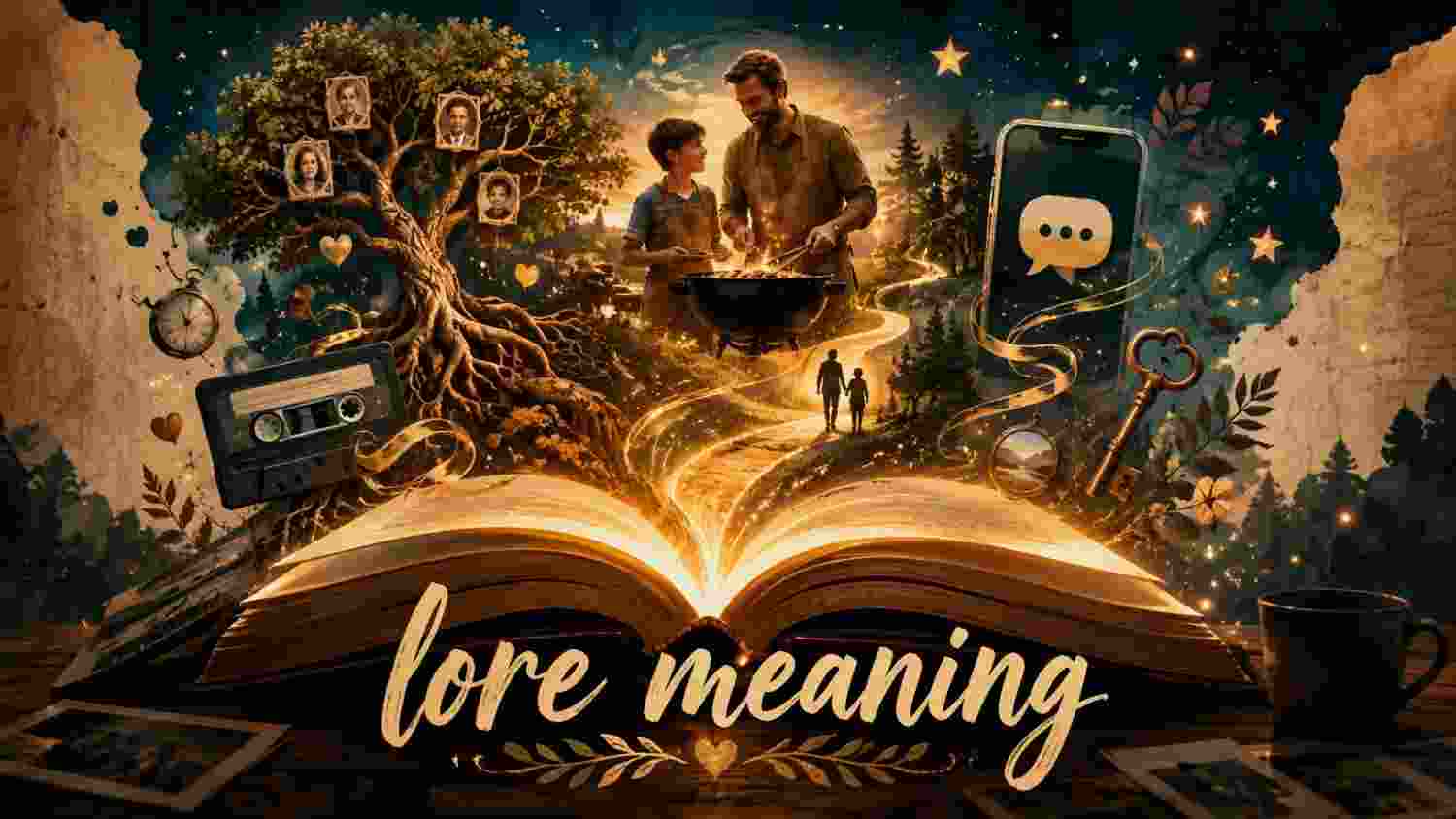
Lore meaning centers on knowledge passed from person to person through stories, sayings, jokes, or traditions. Merriam-Webster defines lore as traditional knowledge or belief. That knowledge can come from a family, a culture, a game world, or your own life. When you grasp lore meaning, you see how small stories create shared identity.
The Root of Lore: A Quick Language History
The word lore comes from Old English lār, which meant instruction or teaching. Over time, it shifted toward the body of knowledge people passed down orally. You still hear that sense in words like folklore. The root keeps lore meaning tied to shared memory rather than formal study.
Lore Meaning Slang: When Friends Say “That’s Lore”
In internet slang, this idea shifts from old tradition to inside knowledge. A meme, a messy friendship history, or a strange family habit can all become lore. For example, if someone says “that’s lore” under a post, they mean the event is part of an ongoing story. Slang often treats a person’s past as a series of episodes.
- “That’s deep lore” = hidden backstory
- “New lore dropped” = fresh personal update
- “My lore is tragic” = self-deprecating personal history
Dad Lore Meaning: The Legendary Stories Fathers Carry
This term refers to the repeated stories, sayings, and habits a father becomes known for. It might be the same fishing story, a questionable grill technique, or an unexplained rivalry with a squirrel. These stories gain weight through repetition. That kind of family story matters because it turns ordinary moments into lasting identity.
Common dad lore examples:
- Strong opinions about gas stations
- A legendary “shortcut” that is never short
- Unexplained knowledge of every classic rock band
My Lore Meaning: Turning Your Life into a Story
This phrase covers the personal backstory you tell about yourself: childhood memories, past relationships, mistakes, wins, and unusual habits. When people say “my lore,” they often joke about embarrassing or defining moments. You can shape this narrative. That personal story becomes the emotional thread others remember.
Your “my lore” might include:
- The time you moved schools in seventh grade
- A fear of geese that started at a park
- A lucky shirt worn for every interview
Lore in Games, Movies, and Fandoms
In games, lore meaning expands into full worldbuilding. Developers write histories, maps, character motivations, and hidden texts that may never appear in the main story. Players piece this together like detectives. Movies and shows use lore to reward long-time fans, and that connective tissue makes a fictional world feel real.
Fictional lore often hides in:
- Bookshelves inside The Elder Scrolls games
- Background aliens in Star Wars
- A TV show’s newspaper clipping pinned to a wall
Types of Lore: A Quick Comparison Table
| Type | What It Means | Common Example | Why It Matters |
| Folk Lore | Shared community knowledge | Urban legends, proverbs | Preserves culture |
| Family Lore | Stories passed inside a family | A great-grandparent’s journey | Builds belonging |
| Dad Lore | Repeated father stories and habits | The thermostat rule | Creates humor and identity |
| My Lore | Personal history and quirks | A job loss story | Shapes self-image |
| Game Lore | Fictional backstory and worldbuilding | Hidden maps, codex entries | Deepens immersion |
| Slang Lore | Internet or friend-group inside story | “New lore dropped” | Signals closeness |
Why People Crave Lore (and Why You Should Care)
Stories help people make sense of their lives. . Lore gives random events a shape, a cause, and a meaning. When you understand lore meaning, you can connect faster with new groups. Shared stories lower distrust and help you remember details longer than plain facts.
- Stories create emotional anchors
- Inside knowledge builds group identity
- Repetition turns small moments into tradition
How to Build Your Own Lore in 5 Simple Steps
- Choose one true moment that changed you.
- Name the lesson or feeling in one sentence.
- Sharpen the details: place, object, dialogue.
- Repeat it with the same key phrase each time.
- Let others add their versions—that is how lore grows.
Your personal lore meaning should stay simple. You do not need a dramatic life. Small consistent stories often travel further than rare grand events. Practice telling one story until the rhythm feels natural and people repeat it back.
Common Mistakes When Using Lore
People often force lore meaning into every conversation. That turns a natural story into a lecture. Another mistake is over-explaining every detail. Lore works best when listeners can lean in and ask questions. Keep the core story short, visual, and true to your voice.
Avoid these errors:
- Turning every update into “deep lore”
- Inventing facts just to sound interesting
- Repeating a story that hurts someone else
Real-Life Examples of Lore Worth Sharing
A family recipe scrawled on a stained card carries lore meaning through generations. A small town remembers the year the river froze solid. A friend group still references one disastrous road trip. These stories survive because they carry emotion, detail, and a clear lesson—and you already have material like this around you.
- A grandmother’s phrase during hard times
- The office story about the broken printer
- A neighborhood legend about a mysterious house
How to Use Lore to Connect and Teach
Teachers, leaders, and parents can use lore meaning to make lessons stick. Start with a short story, then explain the idea. The story gives the idea a hook. For example, a manager can share a past mistake before introducing a new rule. This lowers defenses and makes the rule feel earned rather than imposed.
Frequently Asked Questions About Lore
What is the simple lore meaning?
Lore meaning is the body of stories, sayings, and knowledge passed between people, often outside formal education. It explains how a group or person remembers identity.
What does lore mean in slang?
Slang turns lore into inside knowledge or personal backstory. A “lore drop” usually means new information about someone’s past or a running joke.
What is dad lore?
Dad lore refers to the repeated stories, habits, and sayings a father becomes known for. These often grow funnier with each retelling.
What does “my lore” include?
My lore includes your personal backstory, quirks, defining moments, and the stories you tell about your life. It shapes how others see you.
How can I use lore in writing?
You can build a small story around a character, object, or place, then repeat key details. This creates depth without long exposition.
Why do games rely on lore?
Games use lore to make worlds feel real and reward curious players. Hidden books, maps, and character notes add layers beyond the main quest.
Start Sharing Your Lore Today
Now you have a working lore meaning, not just a dictionary line. You know how slang twists it, how dads embody it, and how your own life can become a story worth telling. Pick one small memory, shape it into two or three sentences, and share it this week. The stories you repeat are the ones people will remember. What piece of your story will you tell first?
Primary Sources
- Merriam-Webster — https://www.merriam-webster.com/dictionary/lore
- Online Etymology Dictionary — https://www.etymonline.com/word/lore
- Cambridge Dictionary — https://dictionary.cambridge.org/dictionary/english/lore
- American Folklore Society — https://americanfolkloresociety.org/