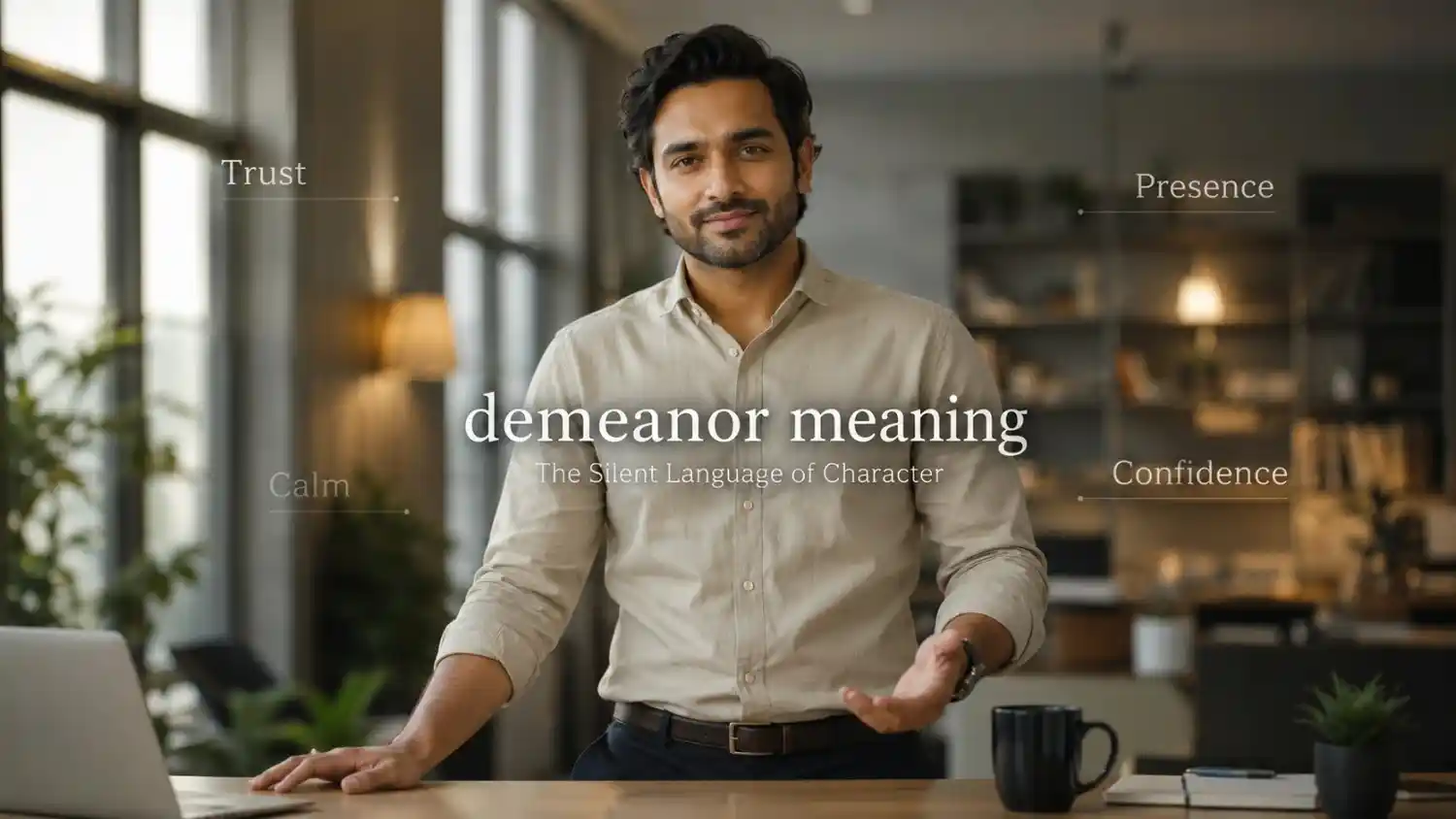
What Is Demeanor Meaning? A Complete Guide to Mastering Your Personal Presence
You walk into a room, and within seven seconds, people have already formed an opinion. That snap judgment hinges on your demeanor. If your demeanor sends mixed signals, you lose opportunities before you speak. This guide unpacks exactly what demeanor meaning entails and gives you practical tools to project the confidence, warmth, and authority you want. Skip the guesswork and start shaping your presence today.
Demeanor Meaning at a Glance
| Aspect | What It Covers | Real‑World Example |
| Definition | Outward behavior, manner, and presence. | A calm, open stance versus fidgeting and avoiding eye contact. |
| Components | Body language, facial expression, tone of voice, eye contact, posture. | Relaxed shoulders, a steady gaze, a warm smile. |
| Impact | Shapes first impressions, trust, and likeability. | Interview success often hinges on a confident demeanor. |
| Key Distinction | Demeanor vs. attitude — demeanor is visible; attitude is internal. | You can feel positive but show a closed‑off demeanor. |
The Straightforward Demeanor Meaning and Its Origins
Demeanor meaning refers to the outward manner in which a person presents themselves—their visible behavior, bearing, and emotional expression. The word comes from the Old French demener, meaning “to lead or conduct oneself.” Over time, it settled into English as the sum of gestures, posture, tone, and facial cues that others observe. When someone asks about demeanor meaning, they are really asking, “What do you silently broadcast?”
You carry a demeanor whether you intend to or not. A slumped posture, a hesitant voice, or a genuine smile all combine into a single impression. Think of it as your personal billboard—people read it before they hear a single word you say.
How Demeanor Meaning Differs From Attitude, Personality, and Behavior
Confusing demeanor with attitude muddles communication. Demeanor meaning lives in what others can see and hear right now. Attitude is the internal mindset you hold—your opinions, beliefs, and feelings—which may not match your outward show. Behavior is the broad category of actions, while demeanor is the specific flavor of those actions.
- Demeanor: Visible composure, tone, and physical presence.
- Attitude: Your private evaluation of a situation or person.
- Personality: Long‑term traits like extroversion or conscientiousness.
- Behavior: Any action, from speaking to walking.
A calm demeanor can mask a storm of anxiety inside. Recognizing the gap helps you read people more accurately and adjust your own signals. Mastering demeanor meaning starts with knowing it’s a tool, not your whole identity.
5 Concrete Examples of Demeanor Meaning in Action
- Confident Demeanor
Chin level, shoulders back, steady eye contact, and a controlled voice. You see this in seasoned public speakers. They pause, they breathe, they occupy space. - Nervous Demeanor
Rapid blinking, fidgeting hands, a tight smile, and a voice that quivers. Even when the words are correct, the demeanor screams discomfort. - Friendly Demeanor
Open palms, genuine smiles that reach the eyes, leaning slightly forward. This demeanor meaning is universal—it says “I’m safe and approachable.” - Aggressive Demeanor
Stiff posture, locked jaw, invading personal space, and a loud, clipped tone. Others feel defensive before any confrontation begins. - Professional Demeanor
Measured gestures, direct yet respectful gaze, upright but not rigid posture, and a calm, clear voice. This is the demeanor meaning most leaders cultivate.
Why Does Demeanor Meaning Matter So Much in Communication?
Words carry only a fraction of your message. Albert Mehrabian’s classic research found that in emotional communication, 7% of meaning comes from words, 38% from tone of voice, and 55% from facial expression and body language—the core of your demeanor. When your words and your demeanor clash, people trust what they see and hear over what you say.
In job interviews, sales calls, or first dates, demeanor meaning determines whether others feel safe, impressed, or doubtful. A study by Ambady and Rosenthal revealed that observers accurately judge a teacher’s effectiveness from just a few seconds of silent video. Your demeanor primes every interaction before you can prove your competence.
The Silent Signals: Body Language Clues That Define Your Demeanor
Body language forms the skeleton of demeanor meaning. Pay attention to these elements:
- Posture: An aligned spine signals alertness and self‑respect. Slouching reads as disinterest or insecurity.
- Eye contact: Holding someone’s gaze for 60–70% of the conversation feels engaged; too little looks evasive, too much feels aggressive.
- Facial expressions: A micro‑expression lasting a fraction of a second can reveal genuine emotion. Paul Ekman’s work shows that these flashes shape perceived trustworthiness instantly.
- Gestures: Open hand movements convey honesty. Hidden hands or crossed arms build invisible walls.
- Proximity: Respecting personal space signals social awareness; crowding signals dominance or neediness.
Adjust one element at a time, and watch how your entire demeanor meaning shifts.
Your Voice and Tone: The Overlooked Half of Demeanor Meaning
People often reduce demeanor to body language, but your voice carries massive weight. A steady, warm pitch projects authority and kindness. A rushed, high‑pitched voice signals panic, even if you’re calm inside. Pace matters too—speaking slightly slower than normal gives your words room to land.
Vocal demeanor meaning includes:
- Volume: Too soft erodes presence; too loud feels domineering.
- Inflection: A monotone drones; varied pitch keeps listeners engaged.
- Pauses: Silence makes you sound thoughtful, not uncertain.
Record yourself on a voice memo app and listen without the visual. What does your tone alone convey? That’s the auditory dimension of your demeanor.
Demeanor Meaning in the Workplace: From Interviews to Leadership
In professional settings, demeanor meaning can outweigh your résumé. Hiring managers report that a candidate’s presence often determines a “yes” within the first minute. Sit with calm energy, maintain respectful eye contact, and speak in measured sentences. That shows readiness and emotional stability.
As a leader, your demeanor sets the cultural thermostat. A leader who walks into a tense room with an open posture, a genuine half‑smile, and a low, even tone instantly calms the team. Employees mirror what you broadcast. Cultivate a demeanor that blends authority with approachability, and you earn discretionary effort from those around you.
Can You Fake a Positive Demeanor? The Science Says Otherwise
Trying to “act” confident when you feel terrified often backfires. Humans detect incongruence within milliseconds. Research on micro‑expressions confirms that forced smiles engage different muscles than genuine ones. The authentic zygomaticus major muscle kicks in around the eyes; a fake smile lives only on the lips.
Instead of faking, shift your internal state. Amy Cuddy’s research on expansive postures shows that holding a “power pose” for two minutes raises testosterone and lowers cortisol, genuinely altering your demeanor meaning. Changing your body changes your mind, which then changes your outward presence. Authenticity always trumps performance.
A 5‑Step Plan to Improve Your Demeanor Starting Today
- Audit with Video
Film a two‑minute introduction of yourself. Watch it without sound, then listen without video. Note three things you want to adjust. - Anchor Your Breath
Before any interaction, exhale slowly to drop your shoulders and steady your heart rate. A calm nervous system fuels a composed demeanor. - Practice the 60‑40 Gaze
During conversations, aim for eye contact 60% of the time while speaking and 40% while listening. It feels balanced and confident. - Adopt an Open Frame
Keep your hands visible, your palms relaxed, and your chest open. This posture signals security and invites connection. - Warm Up Your Tone
Smile slightly before you speak—even on the phone. The physical act softens your voice and infuses your demeanor with warmth.
Small daily practice rewires your default expression so that a positive demeanor becomes your new normal.
How to Accurately Read Someone Else’s Demeanor
Reading demeanor meaning requires you to watch clusters, not isolated cues. A single crossed arm means little; crossed arms, a turned‑away torso, and a tight jaw together signal discomfort. Observe the baseline first—how does the person act when relaxed? Deviations from that baseline reveal emotional shifts.
Context also shapes demeanor. A quiet, still demeanor at a funeral is respectful; the same demeanor at a celebration reads as cold. Check your own bias, too. We often misread nervousness as aloofness. Ask gentle, open‑ended questions when you sense a mismatch, and let the other person fill in the gaps.
Demeanor Meaning Across Cultures: What You Must Know
Demeanor meaning isn’t universal. In Japan, prolonged direct eye contact can feel disrespectful; in the United States, it signals honesty. In some Mediterranean cultures, animated gestures and close proximity signal engagement, while in Northern Europe the same behavior may read as intrusive. A “friendly demeanor” in one culture might be “unprofessional” in another.
Before you step into a cross‑cultural setting, research the norms of personal space, gesture, and eye contact. Adapting your demeanor shows respect and emotional intelligence. It’s not about losing yourself—it’s about building bridges.
Demeanor Meaning FAQs: Your Quick‑Reference Answers
What is the exact demeanor meaning?
Demeanor meaning is your outward conduct and appearance—the combination of posture, facial expression, tone of voice, and body language that others can observe. It’s the visible, audible layer of your presence.
How can I tell if my demeanor is off‑putting?
Notice people’s reactions. Do they step back, cross their arms, or cut conversations short? Ask a trusted friend for honest feedback, or review a short video of yourself with the sound off. Look for closed postures and tense facial muscles.
Does demeanor meaning include clothing and appearance?
Yes. Your clothing, grooming, and overall style form part of the visual package people read as your demeanor. A neat, context‑appropriate appearance supports a professional and respectful demeanor.
Can you change your natural demeanor?
Absolutely. Demeanor is a collection of learned behaviors, not a fixed trait. With consistent practice—video self‑review, posture training, vocal exercises—you can reshape your baseline presence over a few weeks.
What is the difference between demeanor and charisma?
Demeanor is the raw material—visible and audible signals. Charisma is a more complex, magnetic quality that combines warm demeanor, emotional expressiveness, and the ability to make others feel seen and valued. The basis of charisma is a positive attitude.
How quickly do people judge your demeanor?
Research on thin‑slice judgments shows people assess your trustworthiness, competence, and likability within five to ten seconds, often before you speak. Your demeanor does the heavy lifting in that instant.
Your Next Move: Applying Demeanor Meaning to Real Life
You now understand that demeanor meaning is not a fluffy concept—it’s a measurable, moldable set of signals that govern how the world responds to you. Every raised eyebrow, every pause, every relaxed shoulder either builds a bridge or widens a gap. Start small. Record a 30‑second video of yourself speaking. Watch it without sound. What story does your demeanor tell? Then pick one element from the five‑step plan and practice it for a week.
The people who get hired, trusted, and followed rarely leave their demeanor to chance. Shape yours deliberately, and you’ll notice doors opening that words alone could never unlock.
About the Author: Jordan Blake is a communication skills coach with over a decade of experience training executives and teams in nonverbal presence. He holds an M.A. in Industrial‑Organizational Psychology and combines academic insight with hands‑on strategies that have been featured in Inc. and Fast Company.