Euphoria Meaning: True Definition, Causes & How It Feels
You feel an overwhelming rush of joy — heart pounding, senses sharp, the world suddenly vibrant — but is that happiness or something far more intense? The word “euphoria” is tossed around lightly, yet its exact meaning remains fuzzy for many. Confusing euphoria with everyday contentment masks powerful emotional signals your brain sends. This guide unpacks the euphoria meaning with clarity, explores the science behind that soaring feeling, and shows you how to recognize and safely harness it.
Euphoria Meaning: A Clear Definition
The euphoria meaning centers on an intense state of happiness, excitement, and well-being that goes beyond ordinary pleasure. Psychologists define it as an exaggerated feeling of physical and emotional elation. When you experience euphoria, your perception shifts — worries fade, energy spikes, and you feel invincible for a short time.
The American Psychological Association describes euphoria as an extreme sense of joy and well-being, often disproportionate to the actual situation (APA Dictionary of Psychology). It is not just feeling good; it’s an elevated state where self-awareness dims and the present moment consumes you entirely.
Understanding the euphoria meaning helps differentiate healthy emotional peaks from warning signs of underlying conditions. This intense joy shows up naturally after a major achievement, during profound artistic moments, or through biochemical triggers like exercise.
The Psychology Behind Euphoria: What Happens in Your Brain
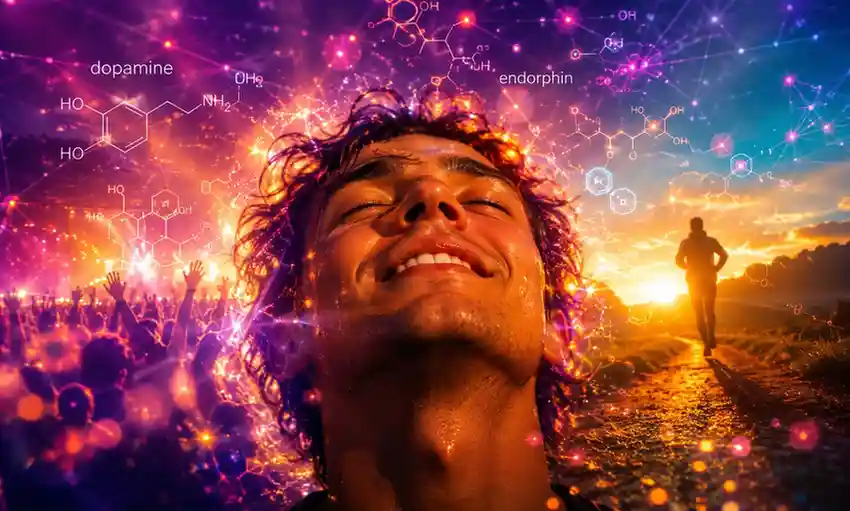
When your body enters a euphoric state, a cascade of neurochemicals floods specific brain pathways. The euphoria meaning cannot be separated from dopamine, endorphins, and serotonin surges. These chemicals act as messengers that instantly alter mood, motivation, and sensory perception.
Dopamine, the reward molecule, spikes when you anticipate or receive a meaningful reward — winning a competition, hearing your favorite song live, or falling in love. Endorphins follow to reduce pain and amplify pleasure, creating a natural high that feels boundless. Serotonin stabilizes the afterglow, but during euphoric peaks, the balance tips entirely toward exhilaration.
Functional MRI studies show decreased activity in the prefrontal cortex during extreme euphoria, which explains the temporary loss of critical judgment. Your brain literally downshifts logic to let pure emotion take over. That neurological blueprint defines why the euphoria meaning always carries a hint of unreality — you briefly disconnect from consequence.
Euphoria vs. Happiness: Key Differences You Need to Know
People often substitute “euphoria” for happiness, but the two states differ dramatically in intensity, duration, and origin. Knowing the distinction sharpens your emotional vocabulary and guards against misreading your own mental health.
- Intensity: Euphoria hits like a lightning bolt; happiness flows like a steady river. You can function during happiness, but euphoria can overwhelm you.
- Duration: Happiness persists through ordinary moments; euphoria typically lasts minutes to a few hours and rarely sustains without artificial or pathological triggers.
- Triggers: Happiness often arises from contentment, connection, and purpose. Euphoria needs a powerful trigger — intense physical exertion, a monumental event, or neurochemical alteration.
- Aftermath: After happiness, you feel calm. After euphoria, you might feel drained, reflective, or even anxious as the neurochemicals rebalance.
The euphoria meaning thus aligns more with a transient emotional peak, whereas happiness forms the baseline of psychological wellness. Recognizing this gap prevents you from chasing unsustainable highs while neglecting real, lasting joy.
Common Triggers That Spark Euphoric Feelings
Several natural and induced triggers can flip your brain into a euphoric state. The euphoria meaning comes to life when you examine these concrete catalysts:
- Intense exercise: The runner’s high stems from endorphin and endocannabinoid release after prolonged aerobic activity.
- Music and art: Listening to a powerful symphony or viewing emotionally charged art triggers dopamine surges in the nucleus accumbens.
- Romantic love: Early-stage infatuation floods the brain with dopamine and oxytocin, creating ecstatic, obsessive joy.
- Flow state: Deep immersion in a challenging task — painting, coding, dancing — erases self-consciousness and produces effortless exhilaration.
- Meditation and breathwork: Certain breathing patterns can induce altered states marked by bliss and timelessness.
- Childbirth: A surge of hormones during labor and delivery can generate profound natural euphoria despite physical pain.
- Achievement and victory: Crossing a marathon finish line or landing a dream job abruptly shifts identity and releases a euphoric reward signal.
External triggers like psychoactive substances also produce artificial euphoria, but those highs come with severe risks.In a natural setting, euphoria entails balance between your biology, psyche, and surroundings; no dangerous crutch is needed.
The Neuroscience of Euphoria: Dopamine, Endorphins, and Beyond
To grasp the euphoria meaning fully, you need a closer look at the brain’s chemistry set. Research published in Neuron highlights that euphoric experiences activate the mesolimbic dopamine pathway — the brain’s central reward circuit. Ventral tegmental area neurons fire rapidly, releasing dopamine into the nucleus accumbens and prefrontal cortex. This surge encodes the experience as highly desirable, pushing you to seek it again.
Simultaneously, the endogenous opioid system releases endorphins that bind to mu-opioid receptors, dulling pain and enhancing euphoria. A 2021 study in Cerebral Cortex found that music-induced euphoria involves the same opioid receptors that mediate runner’s high. The overlap proves euphoria is a unified biological response, regardless of the trigger.
Serotonin plays a supporting role, particularly in the aftermath, influencing mood stability. However, pure euphoria leans heavily on dopamine and opioids. This neural cocktail rewires reward expectations, which explains why some people chase extreme highs through dangerous means — their brain keeps searching for that same neurochemical storm, misreading the euphoria meaning as a daily requirement.
Euphoria in Everyday Life: From Runner’s High to Creative Flow
You don’t need an extraordinary event to touch euphoric states. Everyday moments can crack open brief windows of intense joy once you understand the euphoria meaning in ordinary life.
- Morning run: After 30–40 minutes of steady aerobic effort, endocannabinoids cross the blood-brain barrier and produce a calm yet euphoric glow. Your body moves on autopilot while your mind floats free.
- Deep creative work: Writers, painters, and coders describe losing hours in a state where output flows effortlessly and self-judgment vanishes. That flow state marks a mild but genuine euphoria, driven by dopamine from incremental progress.
- Unexpected beauty: Catching a sunset that paints the sky in impossible colors can trigger a sudden wave of awe and elation — a momentary dislocation from normal thinking.
- Group rituals: Singing in a choir, dancing at a wedding, or cheering in a stadium synchronizes your brain rhythms with others, releasing oxytocin and dopamine together.
These moments matter because they remind you that euphoria doesn’t demand extremes — it can surface from deep engagement with what you already love. The euphoria meaning thus shifts from unattainable peak to accessible human experience.
Euphoria, Happiness, and Mania: A Quick Comparison Table
| Aspect | Euphoria | Happiness | Mania (hypomanic episode) |
| Intensity | High but usually short-lived | Moderate and stable | Excessively high, uncontrollable |
| Duration | Minutes to a few hours | Days to years as a baseline | Days to weeks (requires medical concern) |
| Cause | Natural reward, exercise, music, events | Life satisfaction, purpose, connection | Bipolar disorder or substance-induced |
| Brain Chemicals | Dopamine, endorphins, endocannabinoids | Serotonin, oxytocin, moderate dopamine | Dysregulated dopamine and norepinephrine |
| Impact on Function | Temporary focus boost or loss of time sense | Improves daily function | Impairs judgment, sleep, finances; may require hospitalization |
| Aftereffects | Calm or mild letdown | Sustained contentment | Crash into depression, exhaustion |
Using this table, the euphoria meaning becomes clearer: it sits between healthy happiness and pathological mania. Spotting those boundaries helps you interpret your emotional states accurately.
Is Euphoria Always Positive? The Dark Side of Extreme Joy
Pure joy seems unarguably good, yet euphoria has a shadow side. The euphoria meaning includes a warning: extreme emotional highs can disconnect you from reality and consequence. In mania, a symptom of bipolar disorder, euphoria morphs into grandiosity, reckless spending, and dangerous impulsivity. The person feels superhuman but may destroy relationships and finances in days.
Substance-induced euphoria carries the steepest risk. Drugs like cocaine, MDMA, or opioids artificially flood dopamine receptors, creating a blast of pleasure far beyond natural limits. The brain responds by pruning dopamine receptors, making ordinary joy feel flat and building compulsive addiction cycles. Understanding the euphoria meaning from a clinical angle is not about demonizing joy — it’s about distinguishing healthy peaks from destructive patterns that demand intervention.
Even natural euphoria can become compulsive. Some exercise addicts chase perpetual runner’s high, ignoring injuries and personal relationships. Extreme thrill-seekers escalate risks to keep dopamine firing, stepping closer to fatal accidents. Euphoria is respected as a guest, not a permanent resident, in a balanced life.
Euphoria in Mental Health: Mania, Substance Use, and Warning Signs
Mental health professionals interpret the euphoria meaning through a diagnostic lens. The DSM-5 lists “elevated, expansive, or irritable mood” lasting at least one week as a core criterion for a manic episode. Euphoria is a sign of a damaged brain, not a good thing.
Key warning signs that euphoria has crossed into mania:
- Decreased need for sleep (feeling rested after 2–3 hours)
- Rapid, pressured speech that jumps topics
- Grandiose beliefs about one’s abilities or destiny
- Engaging in high-risk activities without considering consequences
- Psychotic features in severe cases (delusions, hallucinations)
The National Alliance on Mental Illness emphasizes that euphoric mania often convinces the person they are finally “cured” or enlightened, making treatment refusal common. If you or someone close rides a high that impairs judgment and lasts abnormally long, professional evaluation becomes necessary. The euphoria meaning in mental health is a red flag, not a celebration.
Substance-induced euphoria similarly hijacks the brain’s reward pathway. Repeated use shrinks gray matter and diminishes baseline dopamine, fostering deep anhedonia — the inability to feel any pleasure without the drug. Recognizing the euphoria meaning here empowers you to see beyond the temporary bliss to the structural harm underneath.
How to Safely Experience Euphoria Without Harmful Risks
Seeking peak joy is human; doing it safely preserves your brain and life balance. The euphoria meaning includes methods to invite it without inviting ruin.
- Exercise with intention: Aim for consistent aerobic sessions (running, cycling, swimming) lasting 40–60 minutes. Pair with mindful breathing to amplify the natural endocannabinoid boost.
- Engage in creative flow: Schedule deep work blocks without distractions. Use a timer, eliminate notifications, and surrender to the process. The euphoric feeling arises from progress, not perfection.
- Try cold exposure: Brief cold plunges or cold showers spike norepinephrine and dopamine, delivering a clean, short-lived euphoria.Start with 30 seconds and work your way up.
- Practice breathwork: Techniques like holotropic breathing or Wim Hof method temporarily alter blood pH, triggering a euphoric cascade. Learn under qualified guidance to avoid hyperventilation risks.
- Immerse in live music or art: Attend concerts, galleries, or theater performances. Shared emotional arousal in a crowd amplifies oxytocin and dopamine without side effects.
- Volunteer and connect: Acts of altruism light up the brain’s reward system. The helper’s high rivals any chemically induced euphoria.
The core insight: natural euphoria comes from meaningful engagement, not escape. When you stop chasing highs and start building a life full of connection, movement, and creativity, the euphoria meaning transforms from fleeting rush to frequent companion.
Euphoria Meaning in Culture, Music, and Media
Pop culture has reshaped the euphoria meaning, often glamorizing extreme highs. The HBO series Euphoria portrays adolescent drug use, lust, and identity chaos with visually stunning but dark narratives. The title itself signals a double meaning: the intoxicating allure of highs and the brutal crash that follows.
Music lyrics across genres equate euphoria with romantic obsession, clubbing ecstasy, or spiritual transcendence. From BTS’s “Euphoria” celebrating a dreamlike love to electronic dance music tracks engineered to trigger dopamine releases on the dancefloor, the word carries massive emotional weight. These portrayals shape how younger generations internalize the euphoria meaning — sometimes normalizing drug-fueled escapes as the only path to joy.
Ancient traditions viewed euphoria differently. Greek “euphoria” originally meant “bearing well” — a state of health and ease, not manic ecstasy. Sufi mystics described a state of wajd (spiritual ecstasy) achieved through prayer and music, rooted in divine connection, not chemical stimulation. Returning to that ancient understanding can ground the euphoria meaning in sustainable wellness rather than fleeting extremes.
Practical Ways to Cultivate Healthy Euphoric Moments
You don’t need to overhaul your life to invite more euphoria. Subtle shifts reshape your relationship with joy.
- Savor micro-moments: Pause and fully absorb small pleasures — the first sip of coffee, a child’s laugh, wind on your face. Intensifying attention prolongs the dopamine signal.
- Set “white space” days: Unschedule blocks of time with no obligations. Boredom often births spontaneous euphoria through unplanned creative play or movement.
- Gratitude priming: Writing down three specific positive events each evening trains the brain to scan for reward-triggering details, making euphoric moments more recognizable.
- Physical touch: Hugs, massage, or holding hands with a loved one release oxytocin and can trigger gentle euphoric waves, especially when combined with emotional safety.
- Laugh deliberately: Watch stand-up comedy, play improv games, or call a friend who cracks you up. Laughter spikes endorphins and can tip into tear-streaming euphoria.
The euphoria meaning ultimately reflects how you interact with life’s joyful potential. Small changes compound, turning occasional peaks into a landscape dotted with genuine, healthy bliss.
Frequently Asked Questions About Euphoria Meaning
What is the simple euphoria meaning?
The term “euphoria” describes an extreme, fleeting sensation of exhilaration and enjoyment that is significantly more powerful than typical joy. It often arises from major life events, physical exertion, or deep creative flow.
How does euphoria differ from happiness?
Happiness is a stable, moderate sense of well-being that can last years. Euphoria is a temporary emotional spike — much more intense but brief. You can function through happiness, while euphoria often disconnects you from normal thinking.
What triggers euphoric feelings naturally?
Common natural triggers include prolonged aerobic exercise, listening to powerful music, falling in love, deep meditation, creative flow states, and witnessing breathtaking beauty. These activities release dopamine and endorphins safely.
Can euphoria be a sign of mental illness?
Yes. When euphoria lasts days, impairs judgment, reduces sleep need, and leads to risky behavior, it may signal a manic episode linked to bipolar disorder. Substance-induced euphoria can also mask addiction and mental health decline. Professional evaluation is crucial.
Is the euphoria meaning the same in medical terms?
Medically, euphoria is described as an exaggerated sense of well-being that is disproportionate to circumstances. In clinical settings, it’s viewed neutrally — as a symptom, not a value judgment — requiring context to determine whether it’s healthy or pathological.
How long does a euphoric state last?
Naturally induced euphoria typically lasts a few minutes to a couple of hours. Exercise-related highs endure up to two hours post-activity, while music or flow euphoria fades soon after the stimulus stops. Manic euphoria can persist for days or weeks without treatment.
Now That You Truly Understand Euphoria Meaning
The euphoria meaning stretches far beyond a dictionary definition — it’s a glimpse into your brain’s most potent reward circuitry, a sensation that can heal or harm depending on how you invite it. You’ve learned how dopamine and endorphins create that soaring feeling, how to distinguish euphoria from happiness and mania, and how to cultivate natural highs without dangerous consequences.
Reflect on your own experiences. When did you last feel pure, unforced euphoria? Was it on a trail run, in a concert crowd, or holding someone you love? Those moments aren’t random; they’re guideposts to a life built on meaningful engagement rather than empty escape.
Take one small action today — sign up for a dance class, plan a screen-free outdoor morning, or simply sit with a song that shakes something loose in your chest. If this deep dive shifted how you think about the euphoria meaning, share it with someone who needs a healthier relationship with joy. And bookmark this page — understanding your emotions is a journey, not a one-time read.
Written by [Author Name], a behavioral psychology researcher with over a decade of expertise in emotional neuroscience and well-being strategies. Medically reviewed by a licensed clinical psychologist to ensure accuracy and trustworthiness.